
Our systems · Fort Worth, TX
The Quartz System.
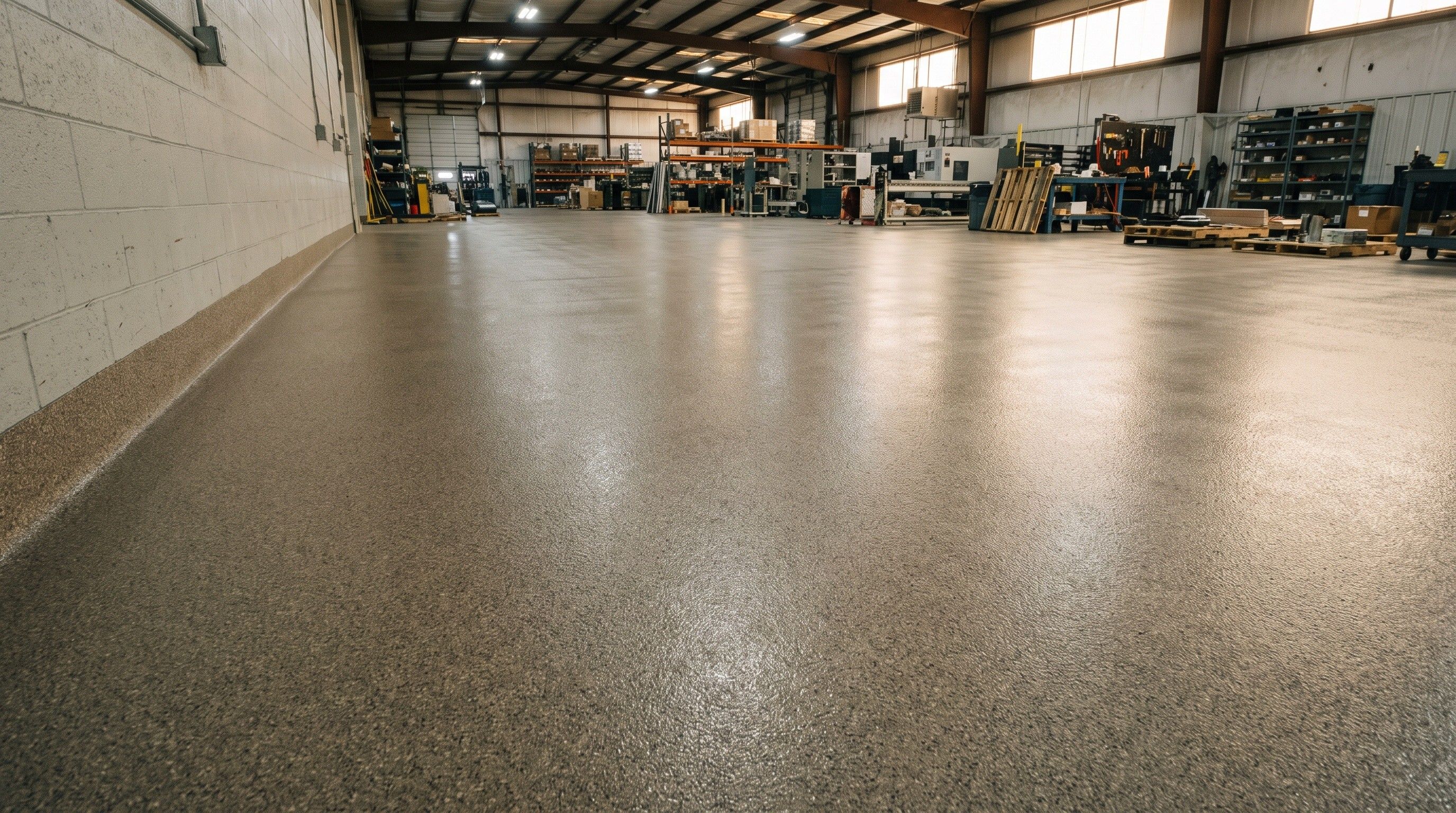
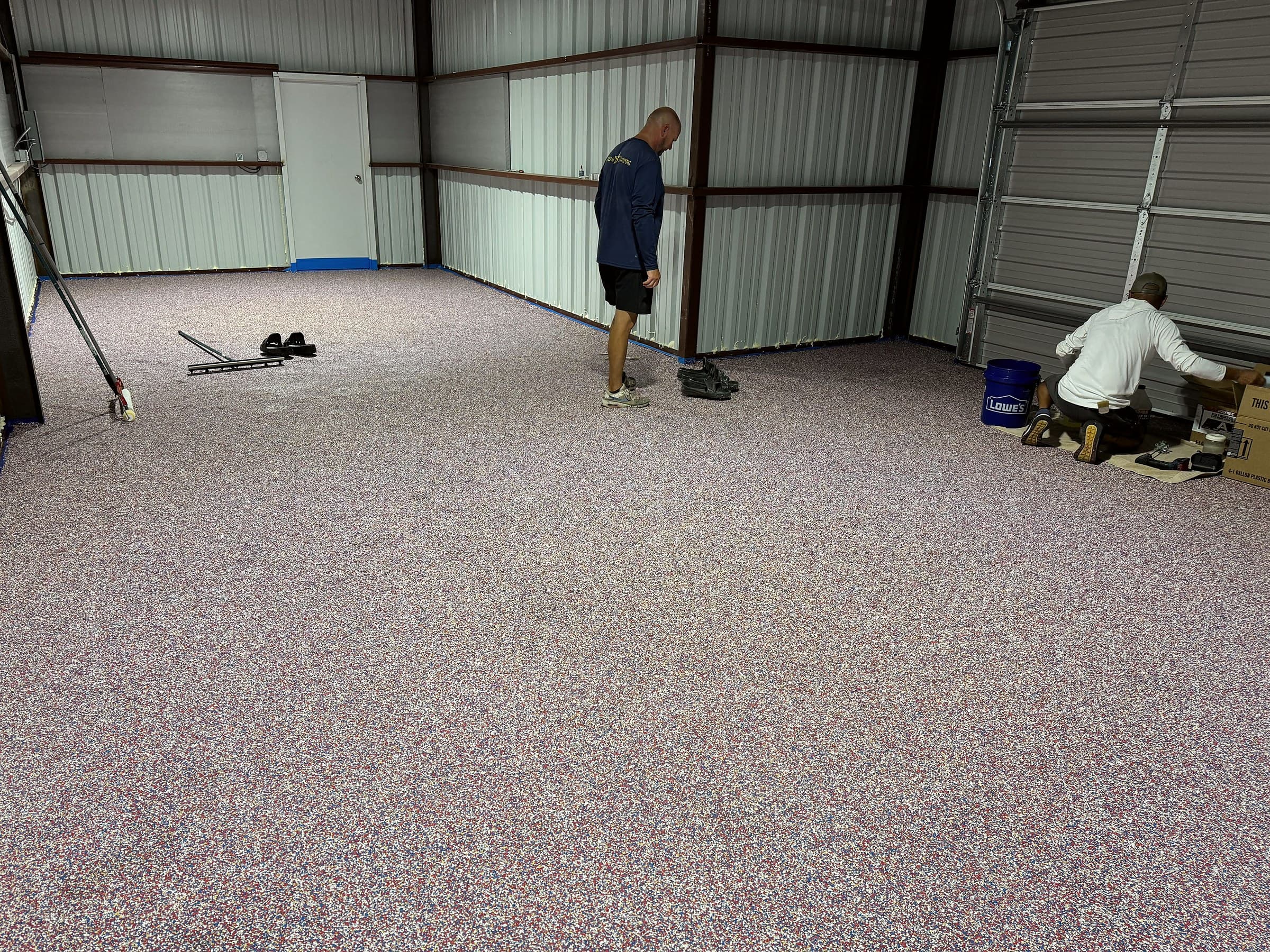
Blended quartz in multiple colors, broadcast into epoxy resin, then sealed with a protective top coat. Heavier and harder than flake, built for high PSI weight and fluids.
- Colored quartz, broadcast to refusal
- Texture from the grain itself
- Built for weight and water
What it is
What quartz actually is.
A quartz epoxy floor is sand. Kiln-dried quartz, most of it carrying a fired color coating around the grain. That is why the color does not rub off the way a pigment does.
It goes in while the resin is still wet, and it keeps going until the coat will not take more. Then it happens again. Most quartz builds go down in two passes, and that second pass is what makes this the heavy build.
After the last broadcast comes the grout coat, the fill between the grains. Fill it properly and the floor washes down. Leave it thin and it holds what lands on it. Once the top coat is on, nobody can see it. That is the layer you are trusting.
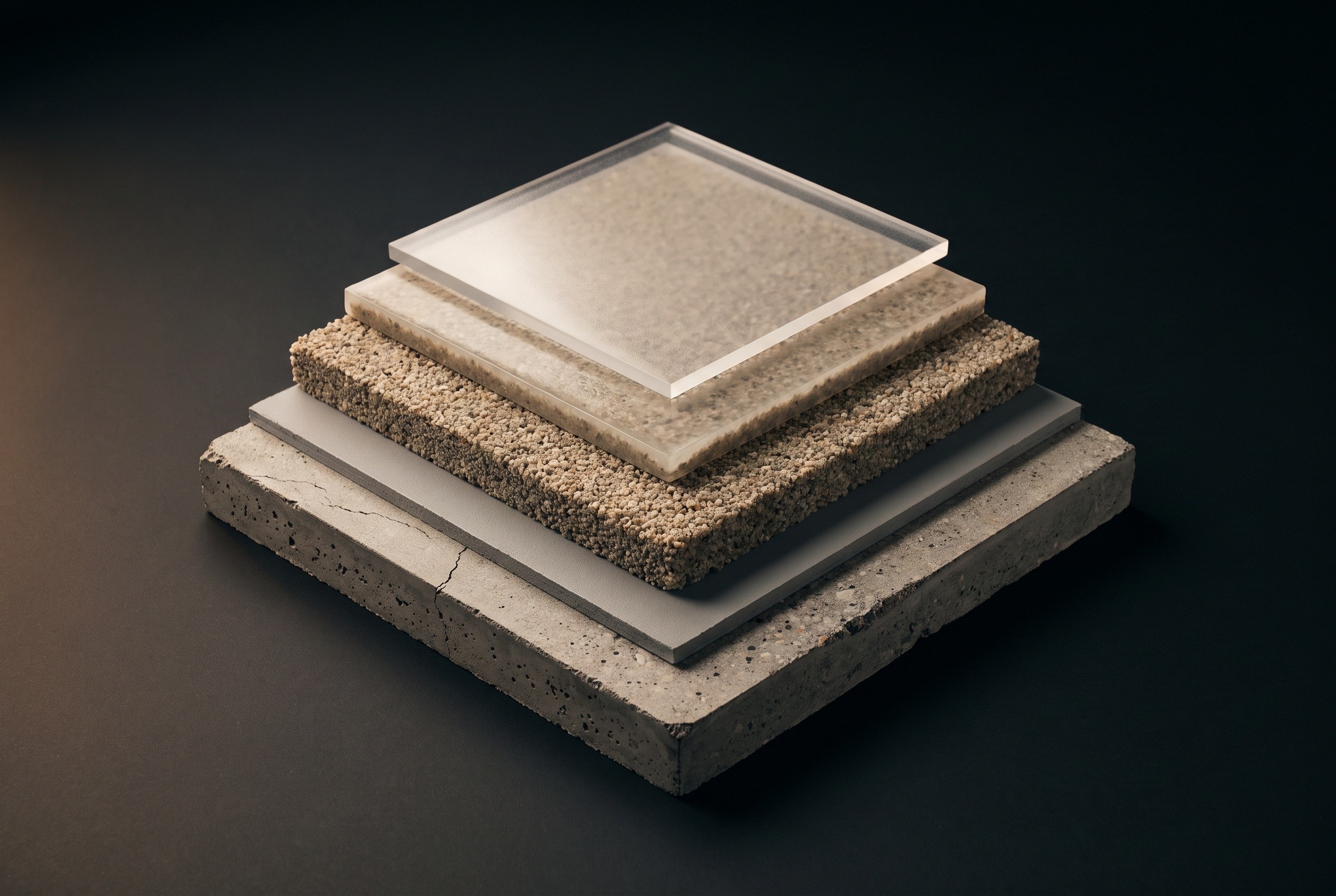
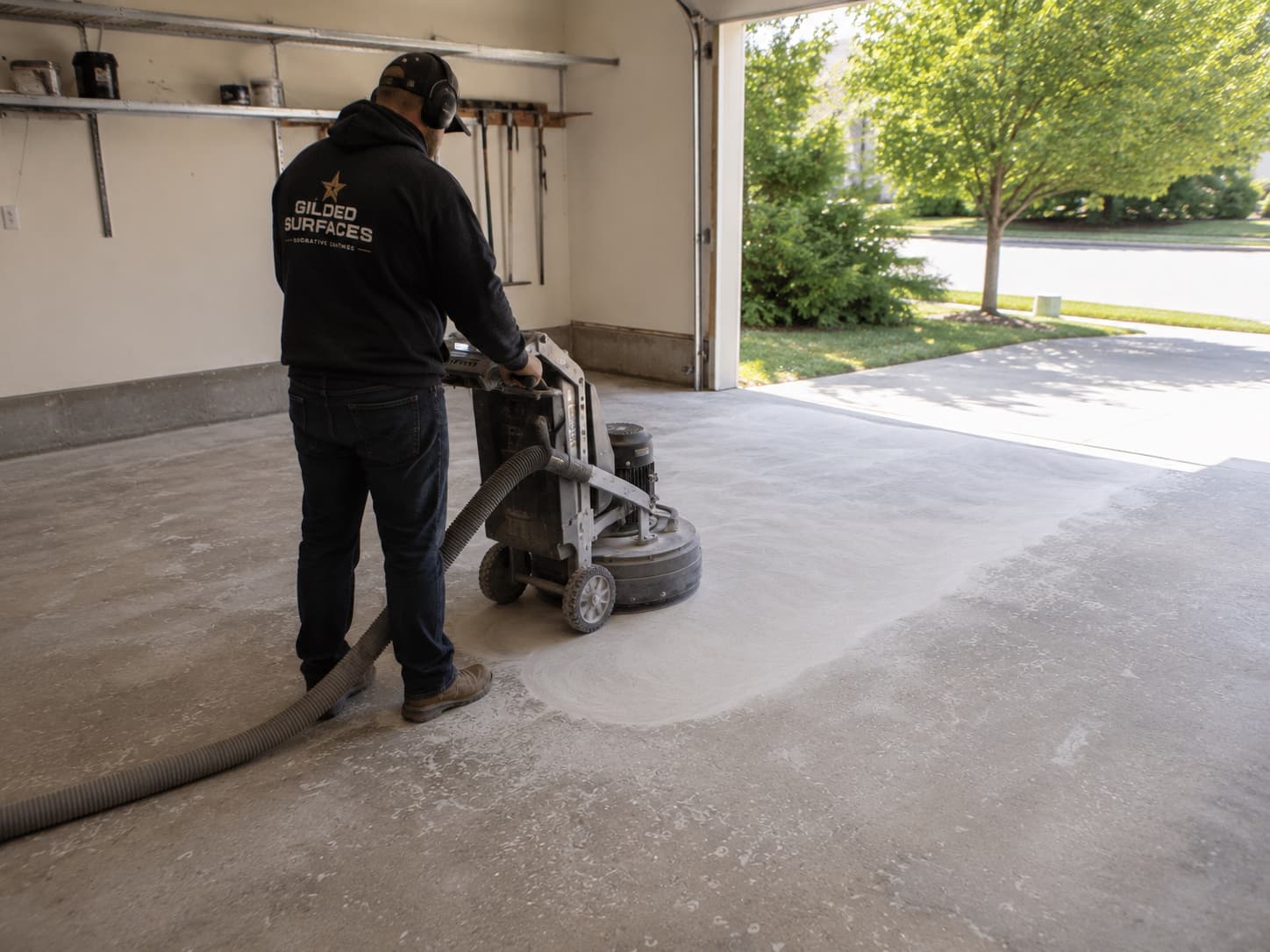
- PREPPED CONCRETE SLAB
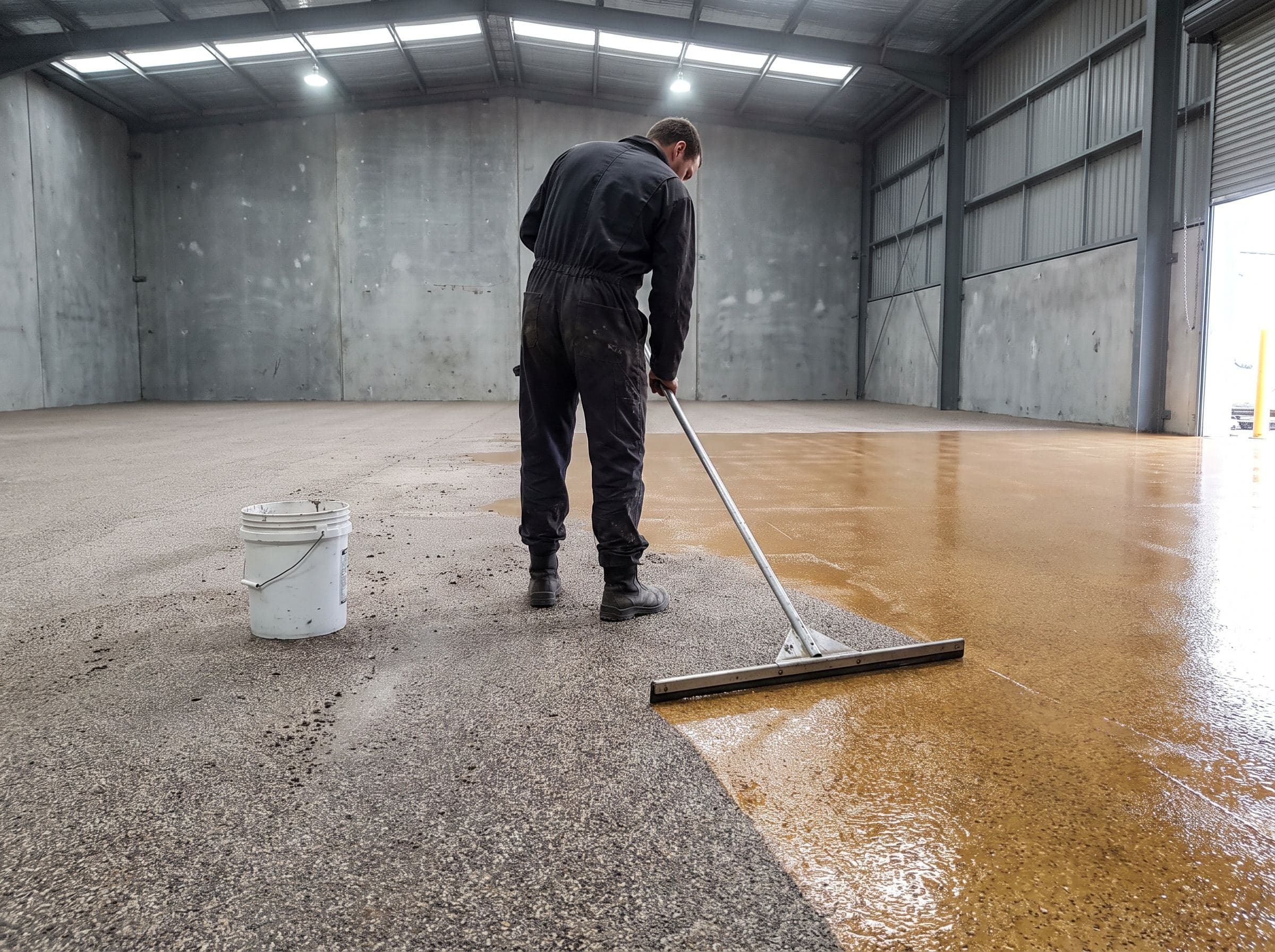
- PIGMENTED BASE COATEPOXY
- QUARTZ BROADCASTTO REFUSAL
- GROUT COATFILLS THE GRAIN
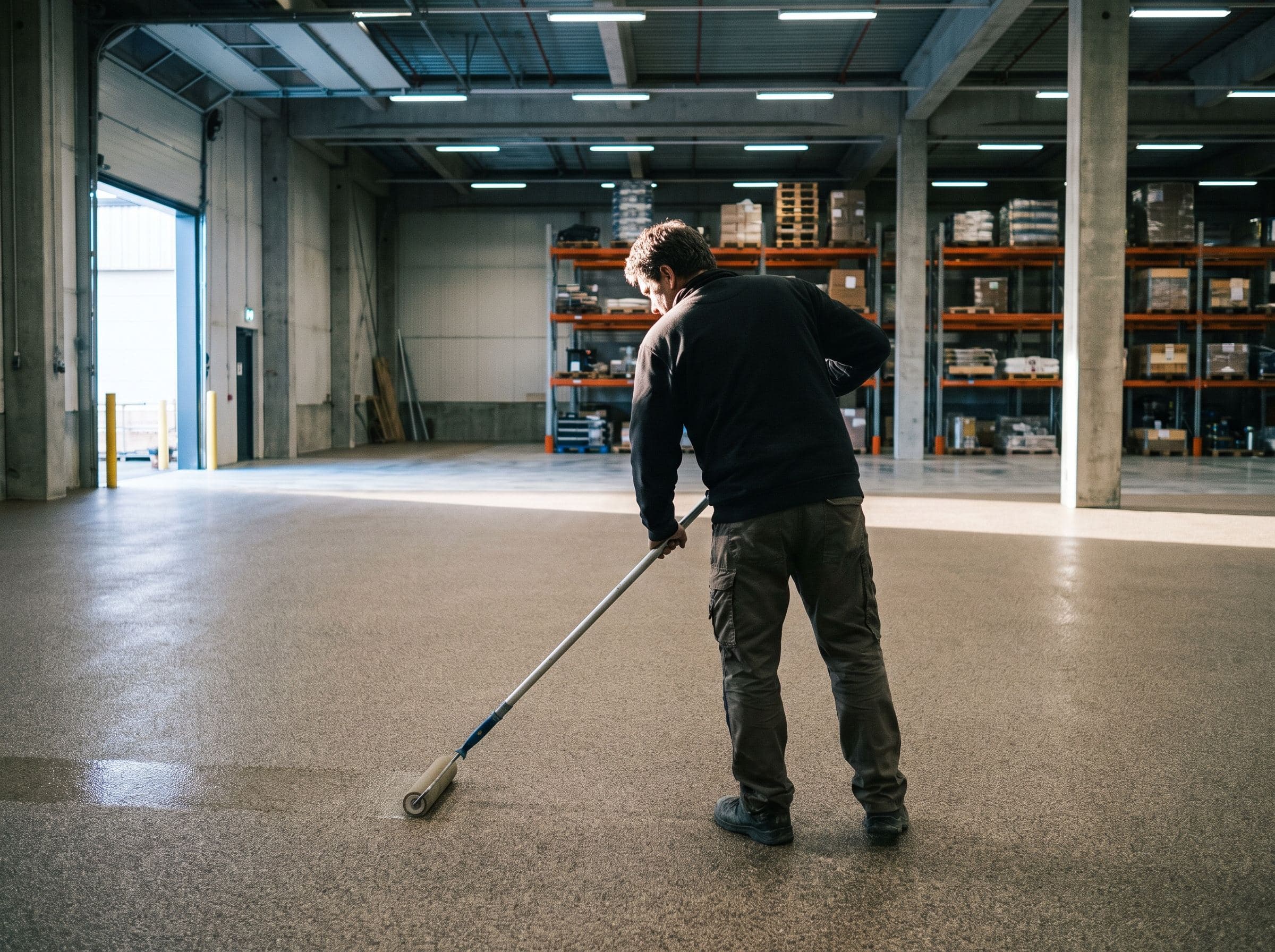
- TOP COATCHOSEN FOR THE ROOM
Why quartz
Why you'd pick quartz.
What the grain does that a chip floor doesn't.
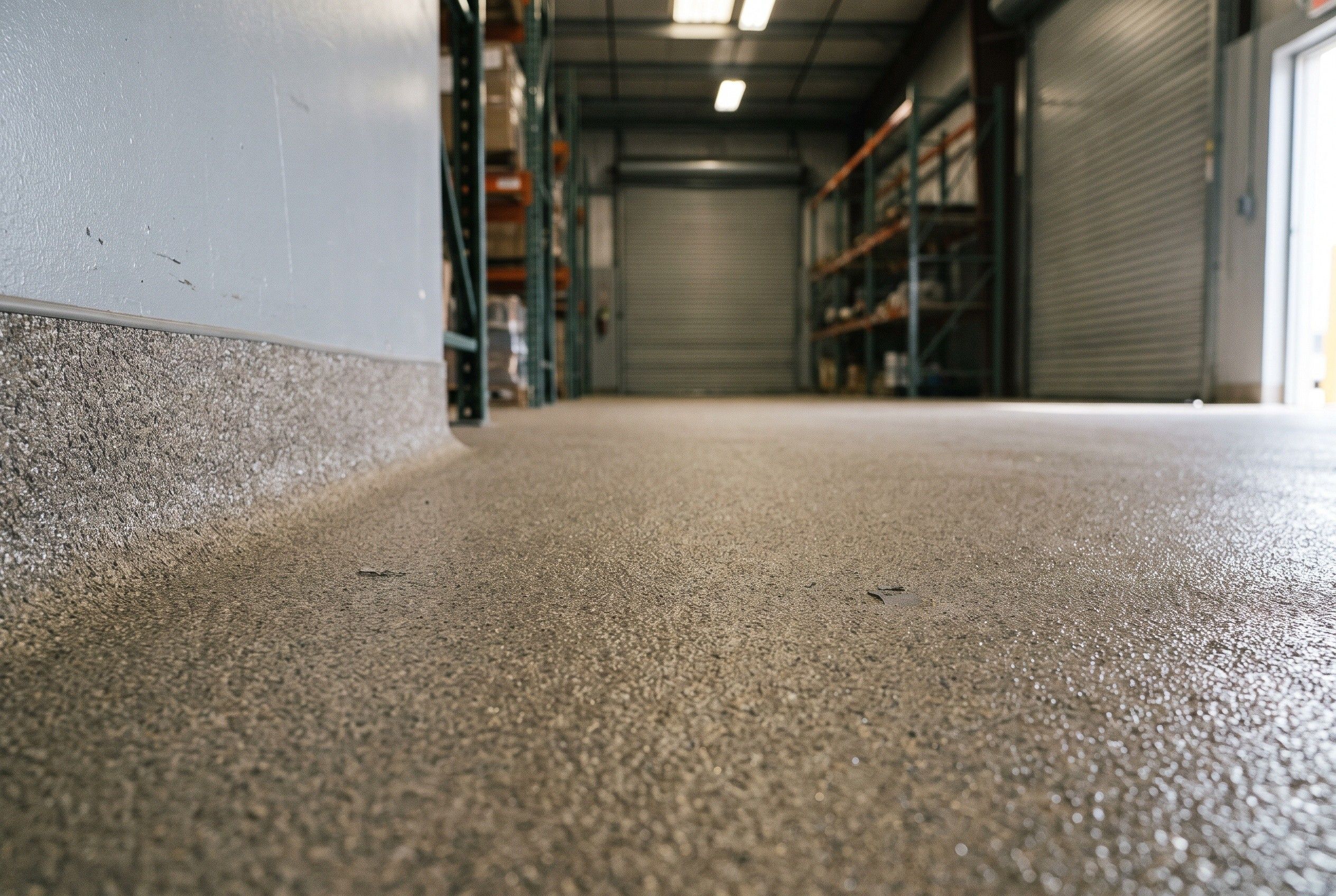
Built for weight and water.
Quartz is the thicker, harder, heavier build of the two broadcasts we lay. Where hard wheels run the same line day in and day out, or where the floor gets hosed at the end of a shift, that is the safer call.
Texture from the grain itself.
A quartz floor has texture because of what is in it. It does not need an additive to get it, and that is true before anyone asks for one.
Hard wheels, shift after shift.
Forklifts and pallet jacks running one line all day are what this build is for. It is the route we take a floor down when flake would wear through above the chip.
Washes down.
A grout coat filled properly closes the surface between the grains. That is the layer that decides whether a quartz floor cleans up or holds what lands on it.
Color fired into the grain.
The color is in the grain itself, not in a pigment laid over the top.
Back on your feet in hours.
You walk on it 8‑10 hours after the top coat goes down, and wheels follow at 48‑72.


Where it works
Where quartz floors belong.
Quartz goes down where the floor is part of the equipment, and where the floor gets hosed.
Our own crews install it across Fort Worth, Tarrant County and the cities around it. Quartz is the system we put down where a floor takes weight and water. What that means for a warehouse, or for a hangar, is on those pages.
- Warehouse aislesPallet jacks and forklifts down the same line
- Commercial kitchensBehind the line, in the wet and the grease
- Production corridorsThe route between the lines
- Workshops with a forkliftBenches, wheels and whatever gets dropped
- Wash-down roomsHosed out, with a coved edge at the wall
- Aircraft hangarsWeight on wheels, over the same ground


Where it stops
Where quartz is the wrong call.
Quartz isn't the right floor for every space. Where it isn't, there is a better one, and we say which.
One smooth, glossy floor
Quartz is texture. If you want a smooth, high-gloss surface with nothing underfoot, this is not it, and that is better said before we grind anything.
That is what metallic is for. Gloss shows everything, so it belongs in rooms that get looked at more than worked in.
A clean, architectural look
If what you want is the concrete itself, ground smooth and left bare, that is polished concrete, not a coating.
Polishing doesn't cover a slab, it uncovers one, so it only works on concrete that is already sound.
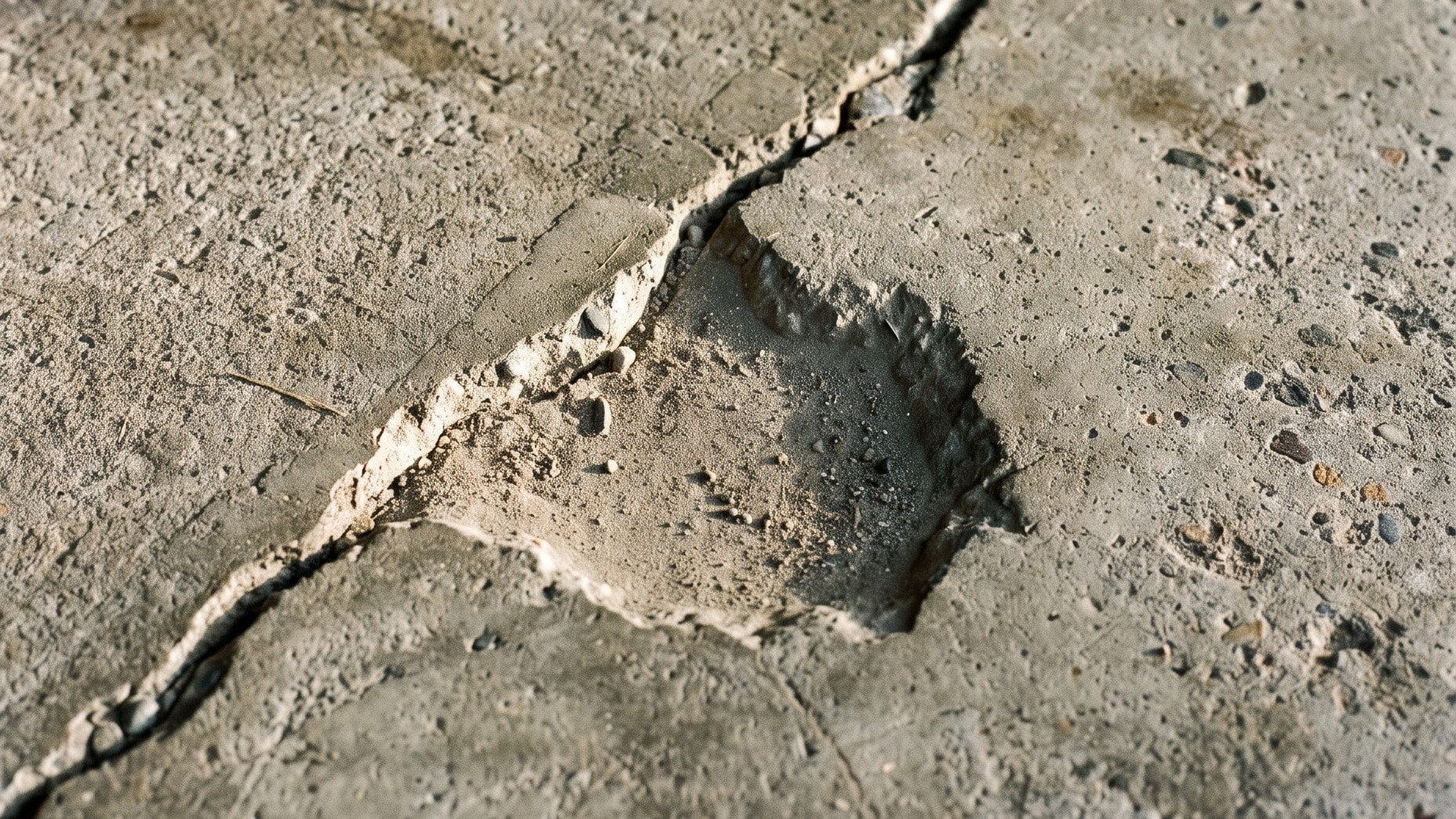
A moving slab
A crack that still opens and closes comes back up through the coating, and the stiffer the build the sooner it does.
We look at the slab before we quote. That one gets settled first.
Moisture coming up
Concrete sits on the ground and the ground holds water. If that water can't escape, it collects under the coating and pushes it off.
The thicker the build, the less forgiving that gets, and this is the thickest one we lay.
Aggressive chemistry
No floor coating is chemical-proof. Coatings resist specific chemicals, at specific concentrations, for a specific amount of time.
Tell us what actually hits your floor, and we'll tell you what holds.
Outside
Outside, sunlight, ground water and freeze cycles work against every resin floor. We don't recommend it.
We'll do it on request, with a one-year term, and we say that before you sign.


Choose your blend
Choose your blend.
Twelve of the colors we broadcast, light to dark. Any blend is made to order for your floor.
Quartz carries its color in a fired coating around the grain. Flake carries its color in the chip. The sheen is set in the top coat, not in the grain.
Sheen and grain both read differently under your own light, so we bring samples to the building. A specific physical sample takes three to seven days to reach us.
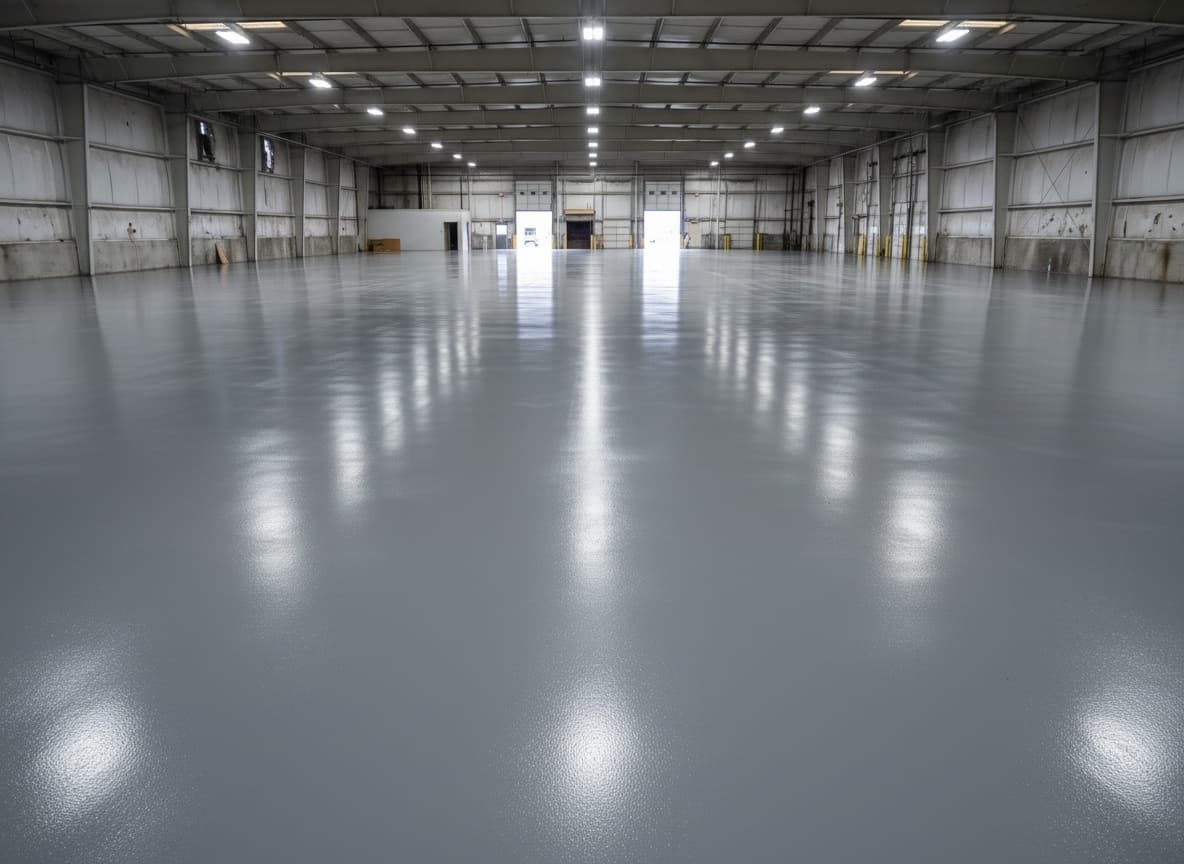
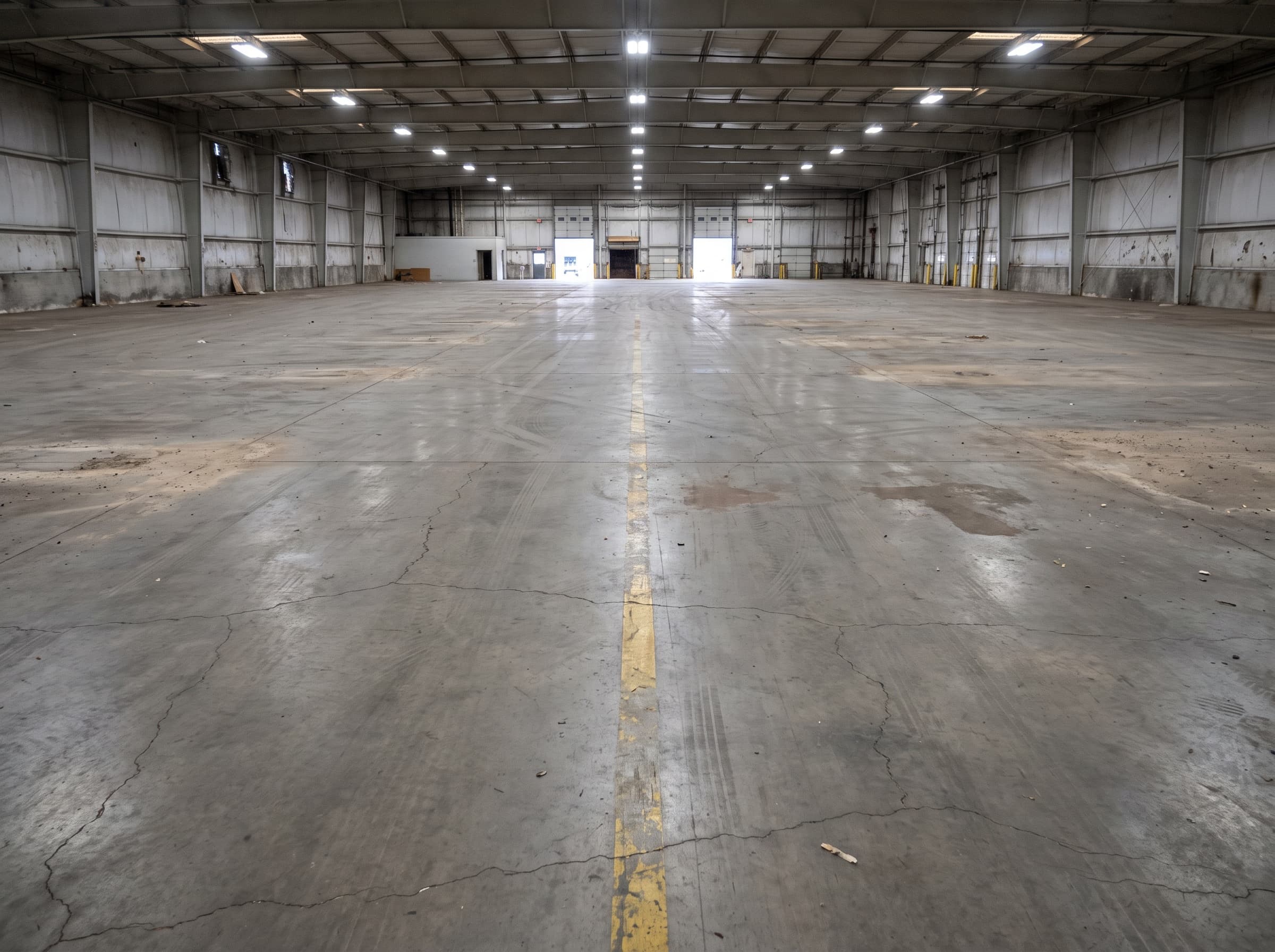
Floor visualizer
See it on your own floor.
Upload a photo of your floor, pick a color, and see your quartz floor in about thirty seconds.
10-Year Limited Workmanship Warranty*
*Terms and conditions apply, and our share of a repair steps down over the ten years. You get the full warranty in writing before you sign.
How a job runs
Decided before the first coat.
Six steps, from the photos you send to the walkthrough at the end.
Not sure it's quartz?
Where the other three win.
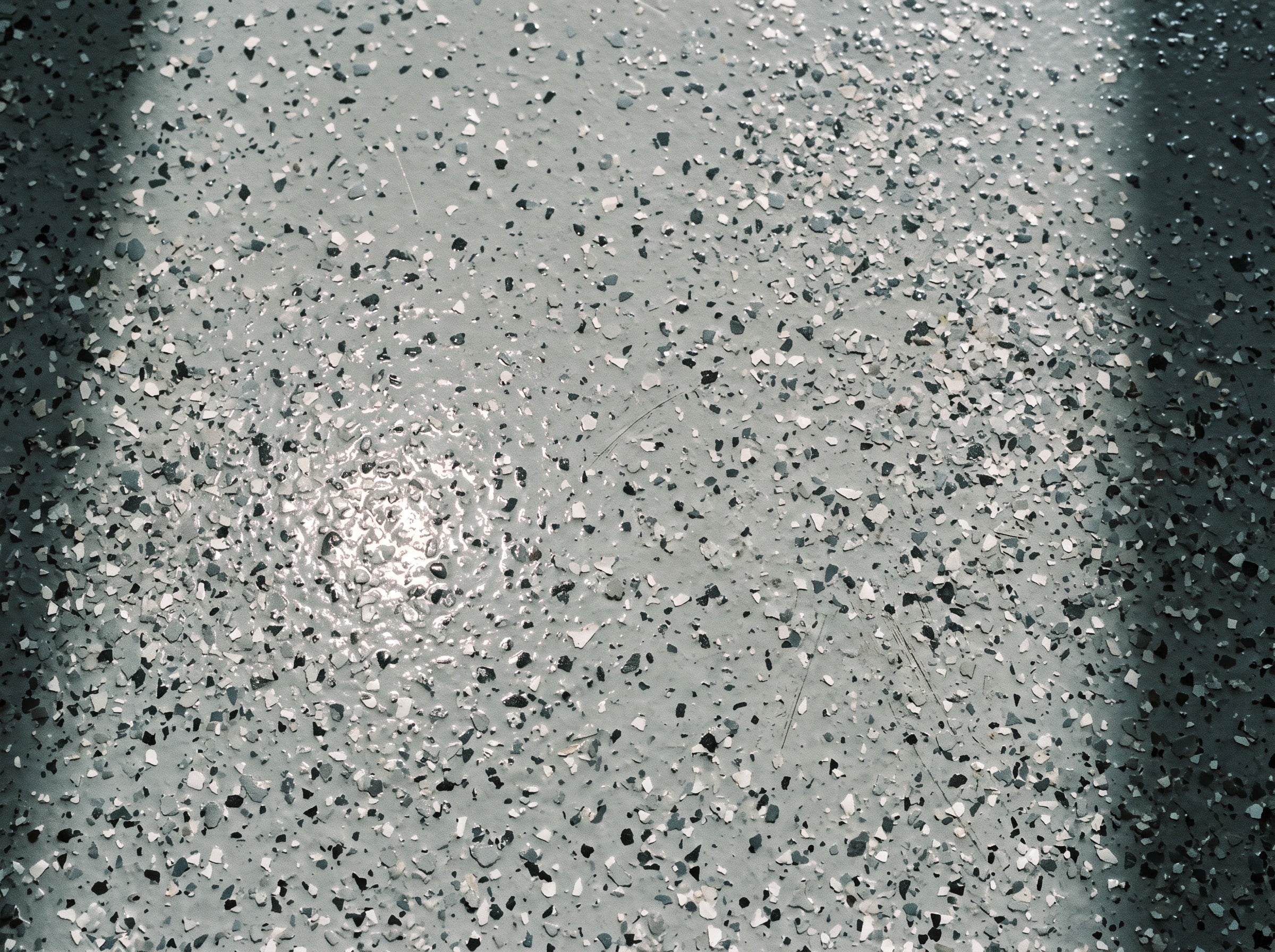 FlakeVinyl chip in the coat. Color and grip.
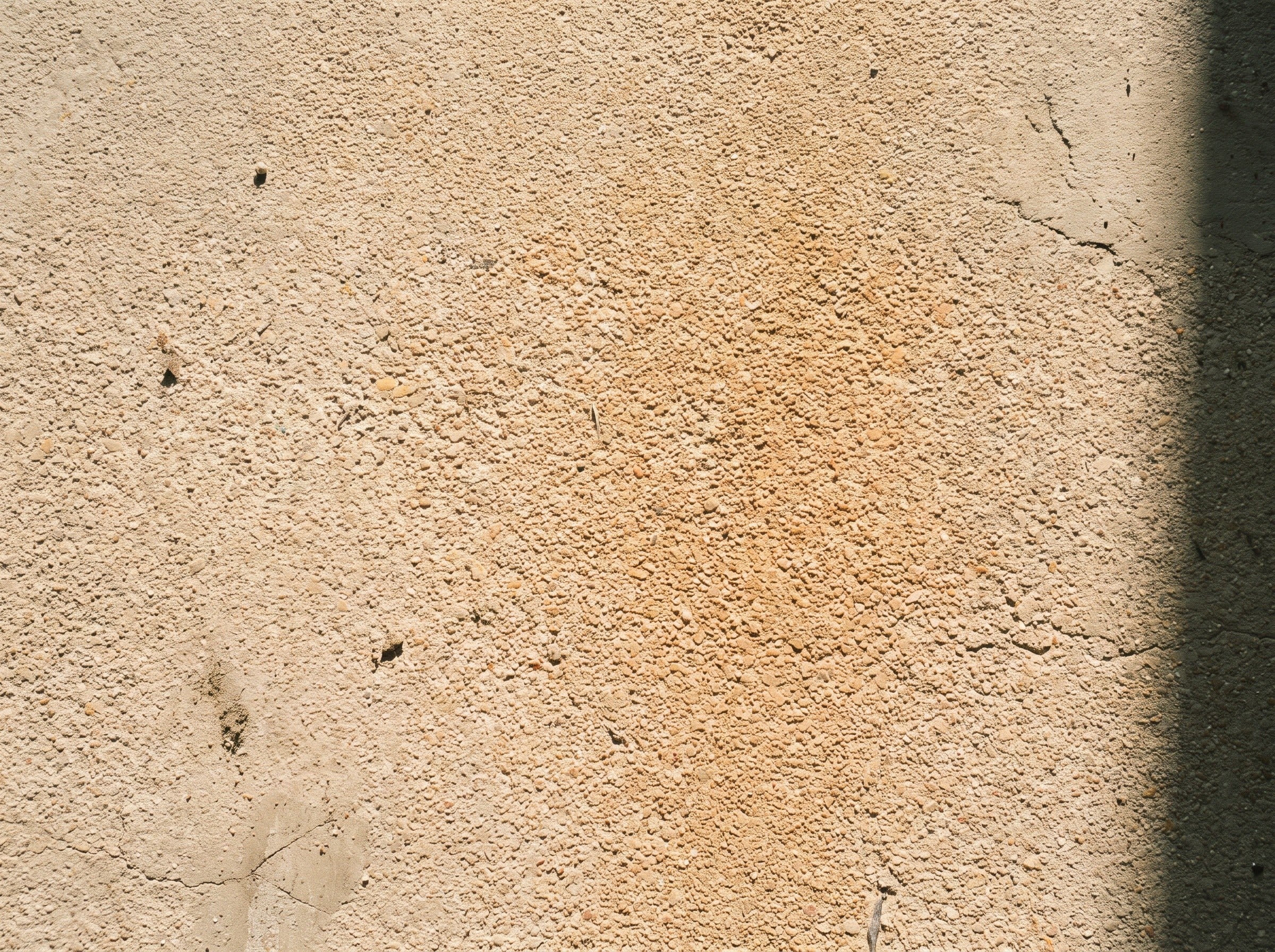 QuartzYou're hereQuartz sand instead of chip. More texture underfoot.
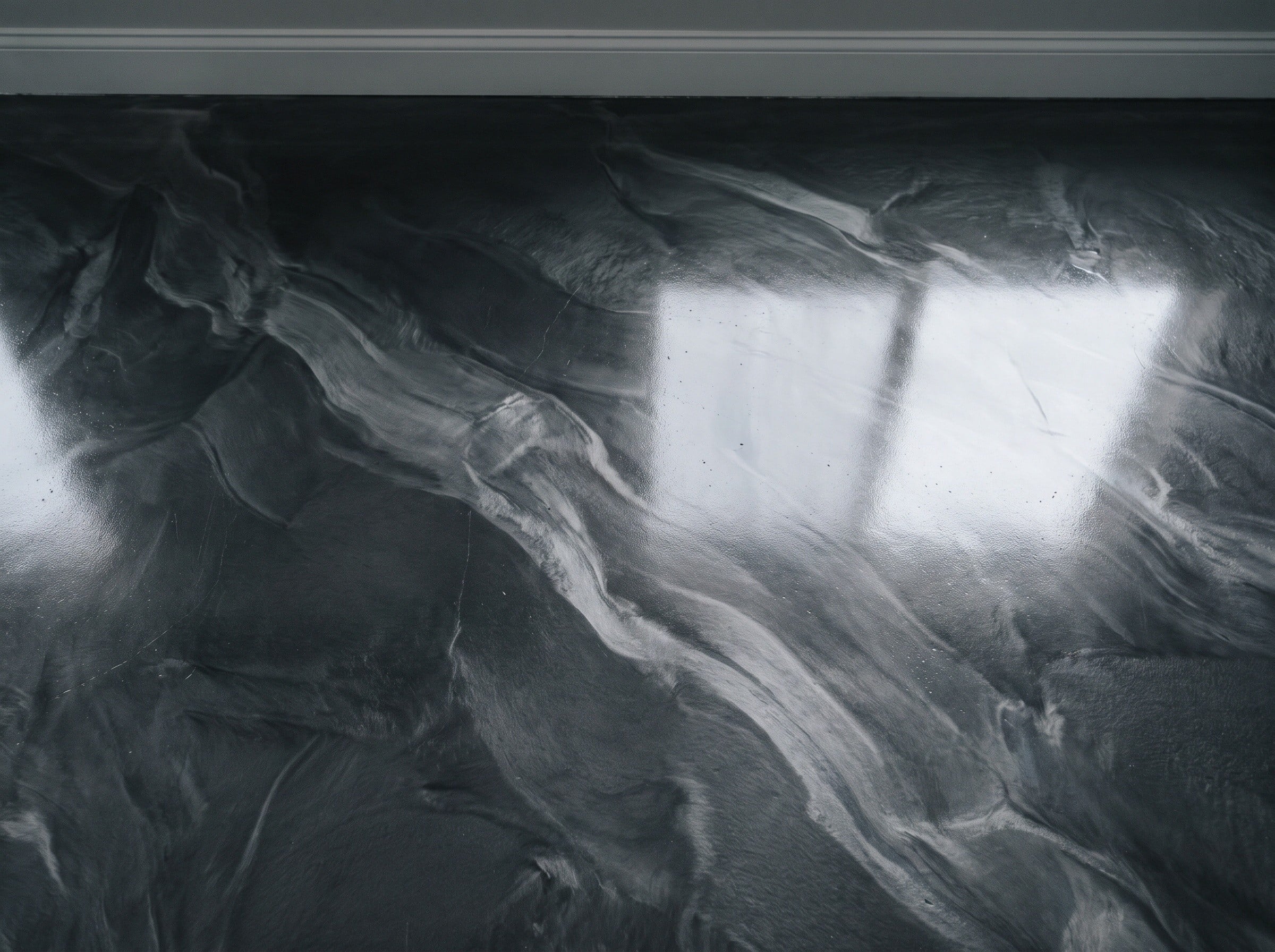 MetallicPigment worked through the resin. High gloss.
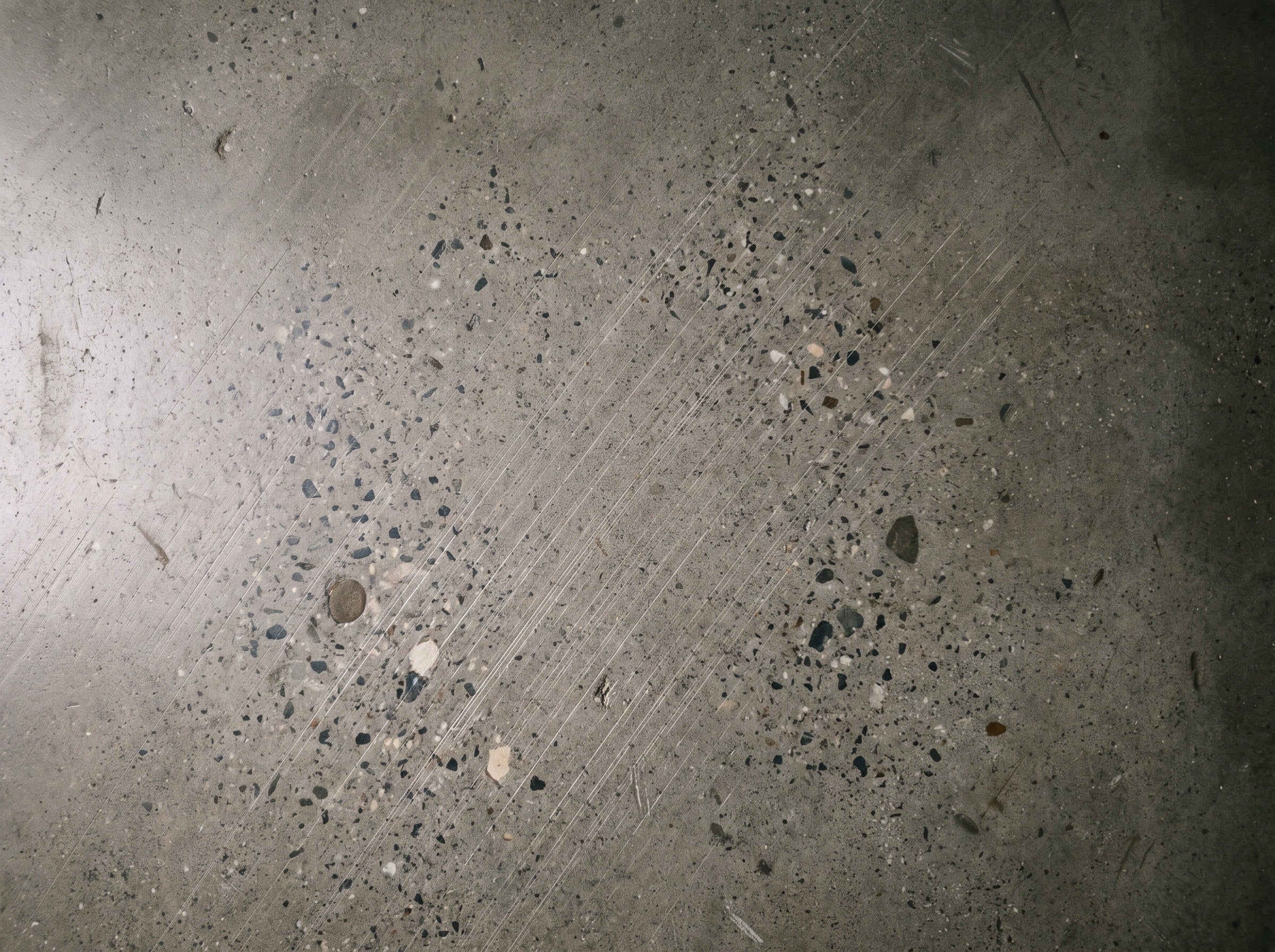 Polished concreteNo coating at all. The slab, ground and polished.
Polyaspartic isn't a fifth floor. It's the clear coat we put on flake and quartz. What polyaspartic does
Straight answers
Questions we get about quartz floors.
What people ask about this system, answered before we ever step on site.
The build, not the grain. Flake is the lighter of the two and it is the one you pick for looks and grip. Quartz is thicker, harder and heavier. Where hard wheels run the same line day in and day out, that is the safer call.
Wet, a smooth resin floor is slick. Quartz isn't smooth: the broadcast leaves grain in the surface, and a quartz floor does not need an additive to have it. We do put one in the last coat on request, and we recommend it in industrial rooms where the site requires it.
It's a shaped edge built up where the floor meets the wall, then coated, so there is no open seam at the base to trap water. On our quotes it is standard, and it is included in the measurements rather than added at the end.
Wheels at 48‑72 hours, feet at 8‑10, fully hard at seven days.
Most of the quartz we broadcast carries a fired color coating around each grain, so the color is part of the material rather than a pigment sitting on top of it. What wears is the top coat above it, and that is what the top coat is there for.
Plan on a machine rather than a mop. A coarse broadcast under a thin grout coat is hard work by hand, so tell us up front if the room gets scrubbed that way, because it changes the grout coat we put down. Use a pH neutral cleaner and keep bleach, solvents and citrus cleaners off it.
They keep moving after we leave, and that is what they are for. We fill them again once the coating is down, and we don't smear coating across them, because a joint that is bridged rather than filled tears the coating open the first time the slab moves.
Get my free quote
Tell us what happens on your floor.
We'll say whether quartz is the right build for it.
Financing
You can pay over time.
Ask for it when we send your written price.
Prefer to talk?
(682) 224-0240Weekdays 7am to 4pm. After hours, leave a message and we call you back.