

Our systems · Fort Worth, TX
Polished concrete in Fort Worth.
Not a coating. The slab you already have, cut with finer and finer diamonds, hardened with a densifier, and polished to a mirror finish.
- No coating, no layer to lift
- The shine comes out of the slab
- Back in use the same day
What it is
Polished concrete is not a coating.
Nothing goes on top of your slab. There is no layer at all, so there is no layer that can lift later. The shine comes out of the concrete itself.
The surface is cut back with progressively finer diamonds until it closes up, and a densifier goes in along the way. It is a silicate. It reacts with free lime in the concrete and forms extra binder in the top of the slab, so the surface ends up harder and denser than it started. Chemistry in the floor rather than a film on it.
Which makes the sequence the whole job. Every pass is there to wipe out the scratches the pass before it left, and the one at 40 to 50 grit is the one that gets skipped. Skip it and the coarse scratches stay underneath. They do not show up until the floor starts to shine, two steps later, and by then the only way back is to start the sequence again.
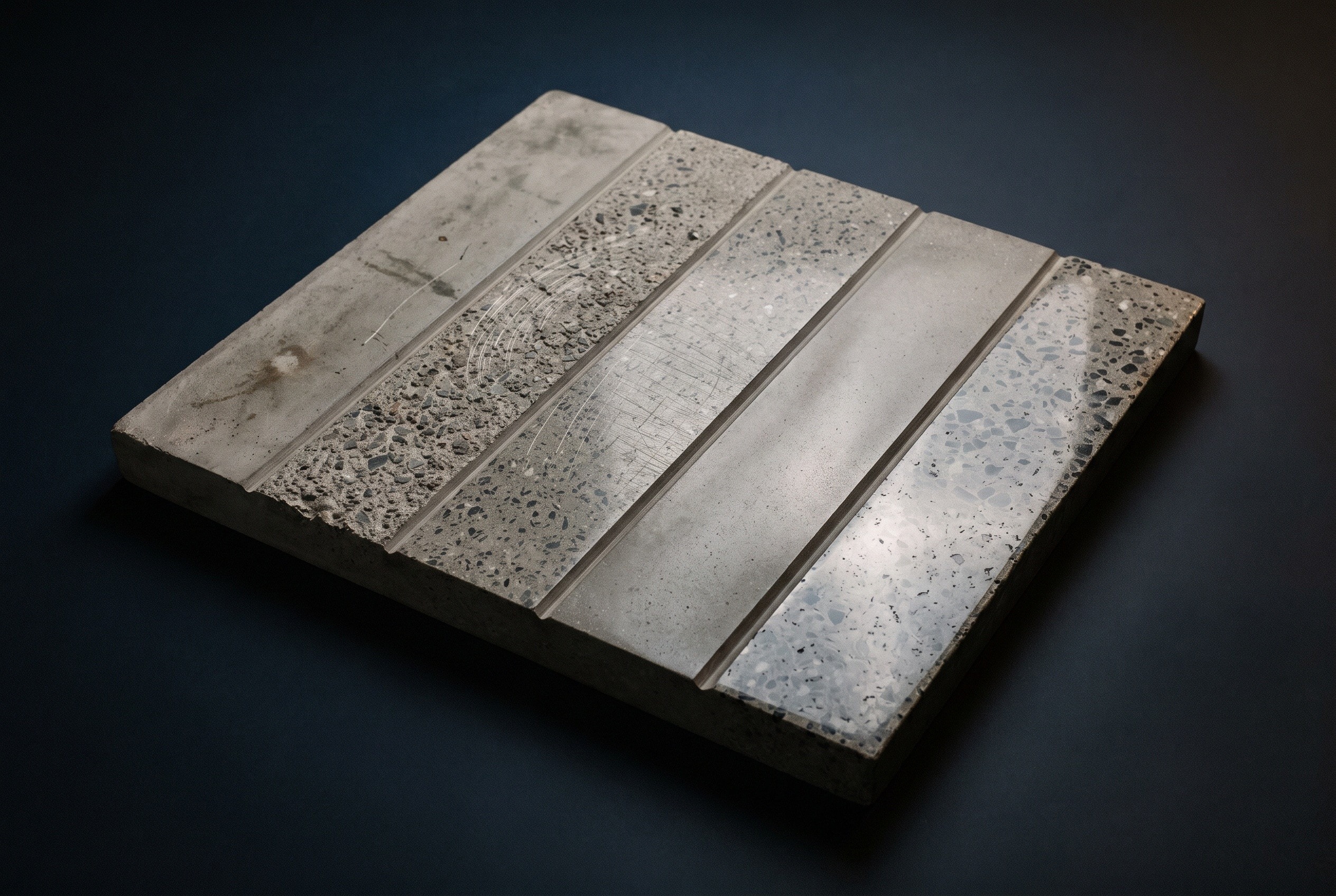
- THE SLABAS IT LIES
- ROUGH CUT16‑30 GRIT
- TRANSITION40‑50 GRIT
- DENSIFIERGOES IN AT 100‑200
- POLISHED400‑800 GRIT
Why a polish
Why you'd pick a polish.
What your own slab does that a coating can't.
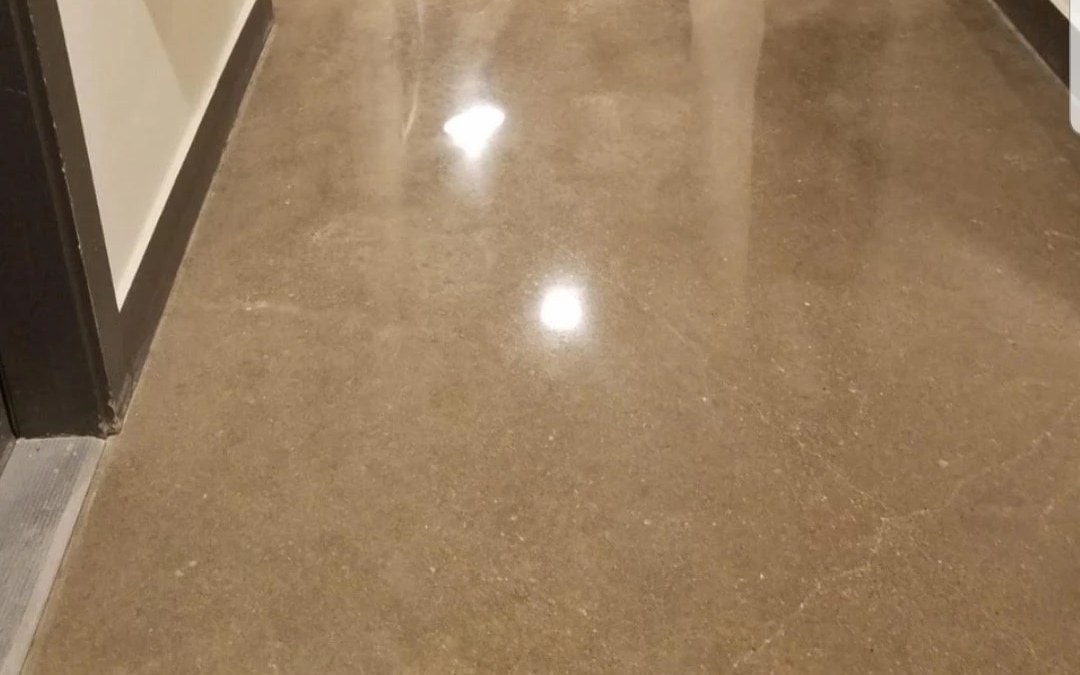
There is no layer to fail.
Every coating is a film bonded to your slab, and every bond is something that can let go. A polish has neither. What wears here is concrete, and concrete wears slowly.
Back in use the same day.
There is no cure to wait out. Feet, wheels and racking go back on the moment the work is finished.
The color is the building.
The cement, the sand and the stone that went into your slab are what you end up looking at. Nothing gets added, and nothing has to be matched.
Harder than it started.
The densifier is not a sealer sitting on top. It soaks in and reacts, and the concrete in the top of the slab ends up denser than the concrete under it.
The shine comes back.
When the gloss starts to flatten, a burnisher brings it up again.
Kept, not renewed.
The upkeep here is cleaning. There is no film to strip and no cycle to re-coat on.


Where it works
Where a polish belongs.
Large interior slabs that are already sound, in rooms that get looked at as much as they get walked on.
Gilded Surfaces takes on polished concrete across Fort Worth, Tarrant County and the cities around it. Larger commercial floors reach further out across the Metroplex. This is an interior floor, and interior work in Texas runs year round.
- Retail and grocery floorsSales floors and the aisles between them
- ShowroomsWhere the floor is part of what people look at
- Warehouse floorsSound slabs, already flat, already there
- Manufacturing floorsThe honest industrial look, kept honest
- Offices and corridorsThe routes that connect everything else
- Public buildingsFloors that take a crowd and get looked at


Where it stops
Where a polish is the wrong call.
Polishing does not cover a slab, it uncovers one. Where that is the wrong answer there is a better one, and we say which.
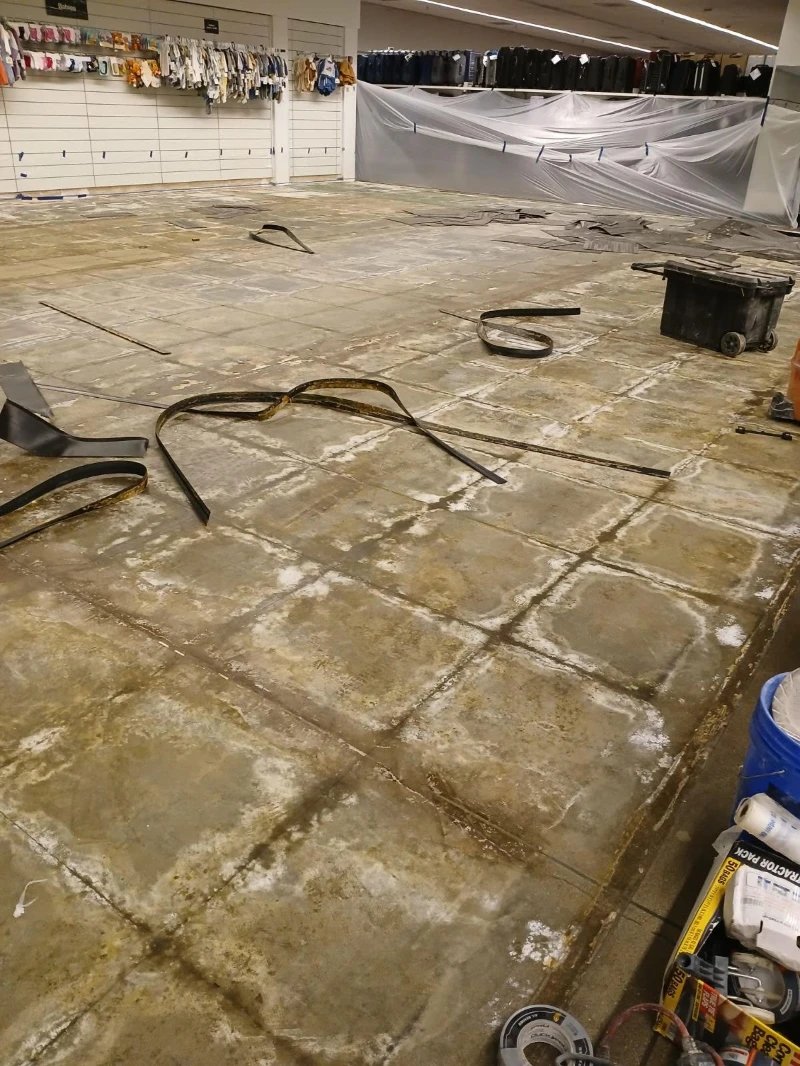
A slab you want covered up
Cracks, patches, hardened stains and color differences come out clearer than they went in, because nothing is laid over them.
If your concrete is rough and you want it to look new, a coating is the honest answer.
Concrete too soft to take it
Hard concrete polishes. Soft concrete fights it, and the gloss either never arrives or it takes far more passes than anyone allowed for.
That is the classic loss on this kind of work, and it gets settled before a number goes on paper.
A color you get to pick
Dye will take, but it is a different product with a different expectation than picking a blend off a card, and it changes what the first cut is for.
If choosing the color is the point, that is what a coating is for.
Anything that soaks in or eats cement
Concrete stays porous, polished or not, and there is no sacrificial layer on top to take the hit. A guard slows oil and water down without stopping them.
Acids attack cement. Tell us what actually lands on your floor.
A thin overlay, or heat under the surface
Grinding takes material off, and how much can safely come off is a question about what is underneath.
On a thin overlay, or with heating pipes close under the top, that gets answered before anything starts.
One even look on an uneven slab
A grinder follows the floor it is on. On a slab that is out of level, one end of a room can show stone and the other almost none.
That gets measured and said out loud first. It is not correctable afterwards.


What you choose
The two things you actually pick.
A polish has no color card. What you choose is how much stone comes up, and how far the shine goes.
Cement paste only, a fine scatter of sand, or stone across the whole floor. Deeper cannot be undone, so it gets decided on your own slab rather than on a screen.
Then how far the shine goes
Where the grit sequence stops is the gloss you end up with, and the same concrete reads very differently at each.
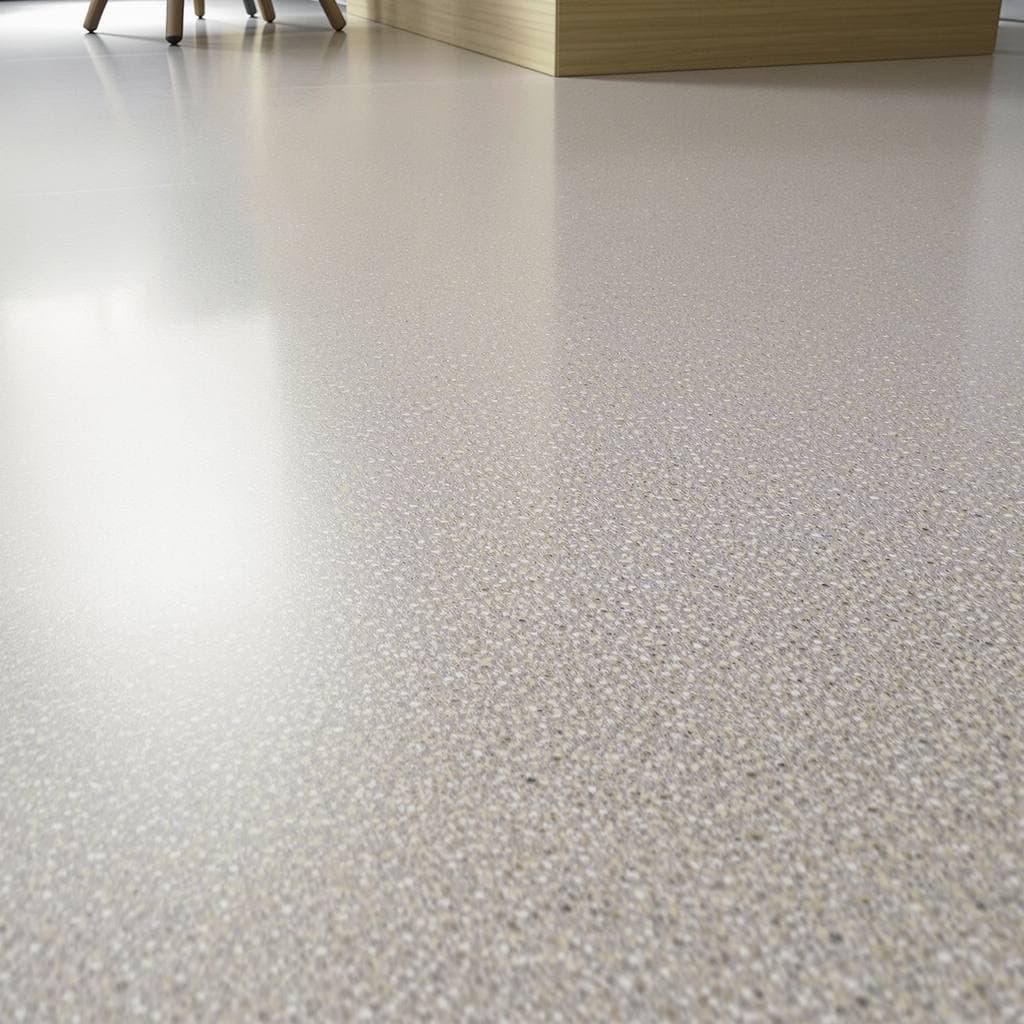
Honed
Stopped early. A low flat sheen, and almost nothing reflects.

Satin
800 grit, and the usual stopping point on a commercial floor.
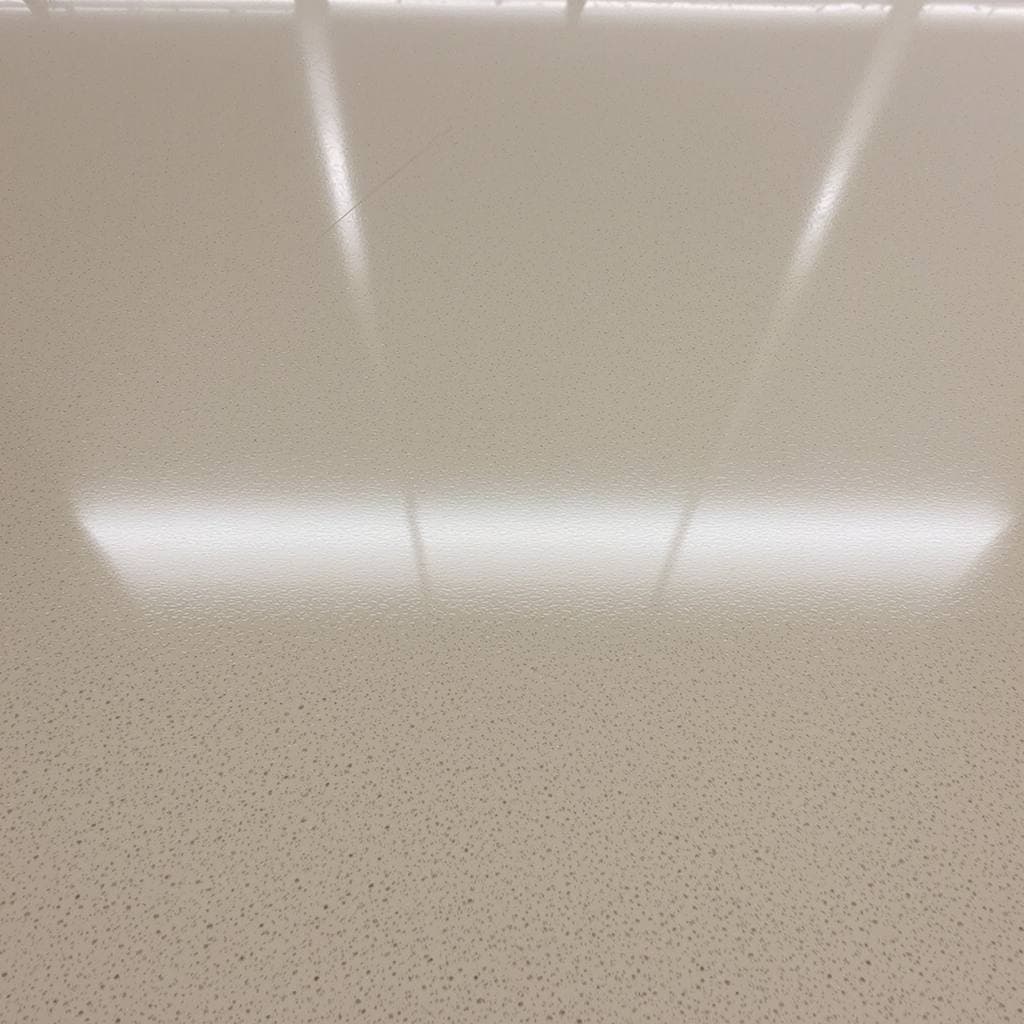
High polish
Burnished at 1500 and 3000. Close to a mirror, and many floors don't need it.
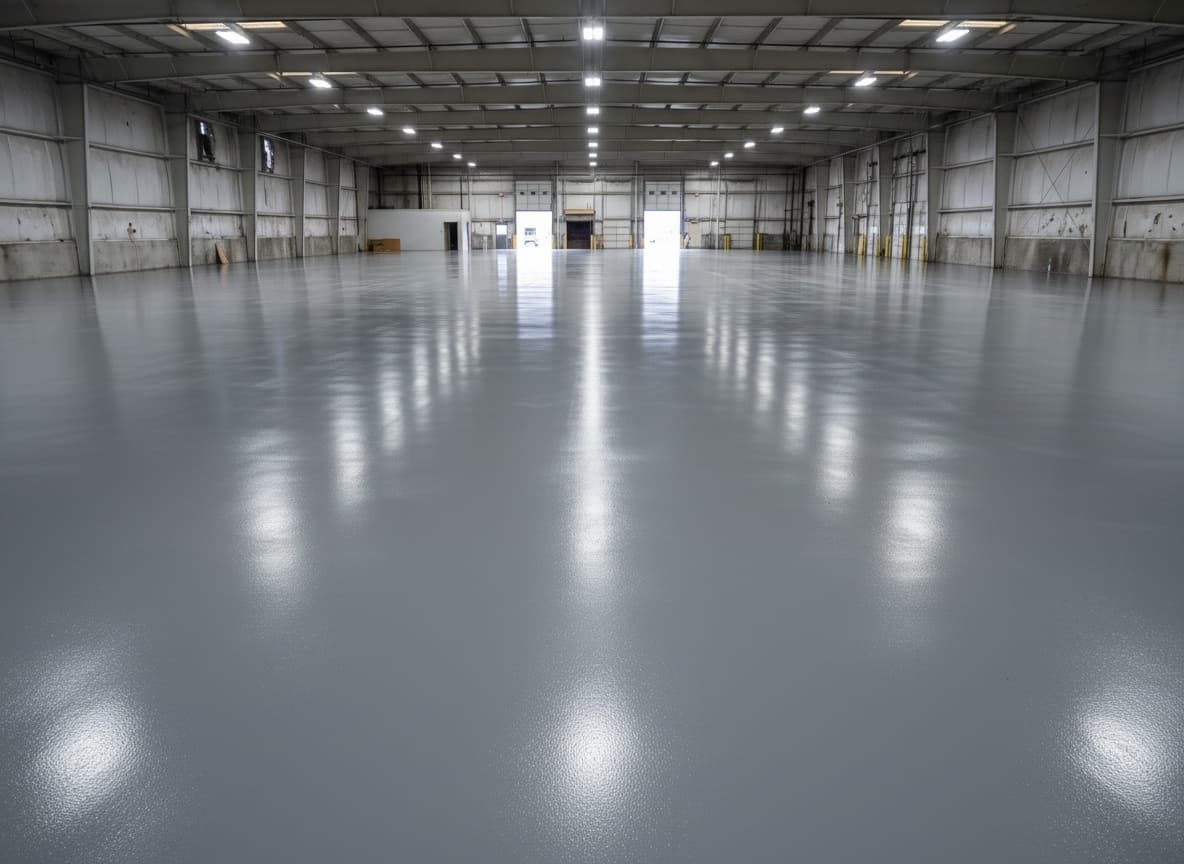
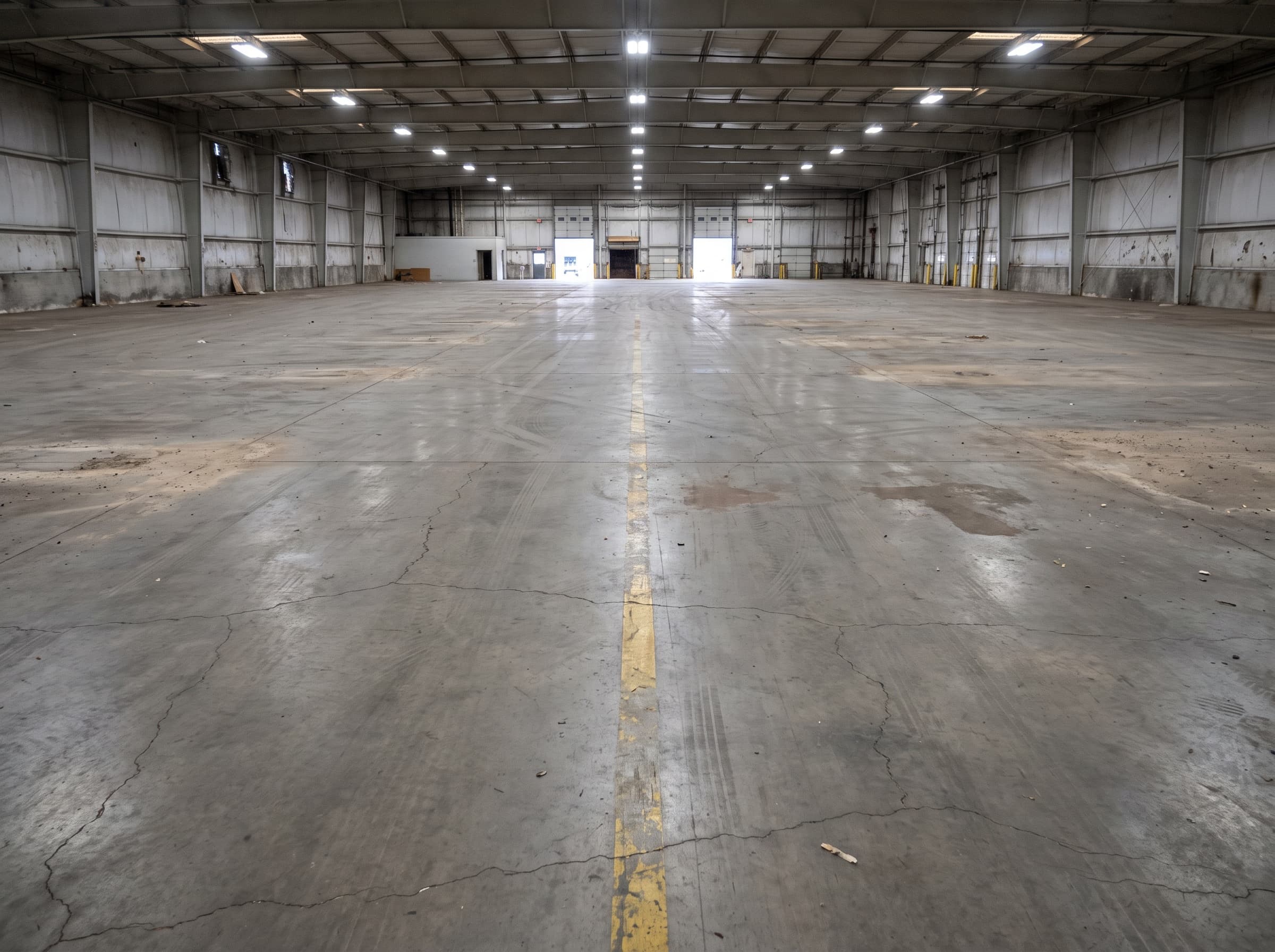
Floor visualizer
See it on your own floor.
Upload a photo of your floor and see it as polished concrete in about thirty seconds.
How a job runs
Decided before the first cut.
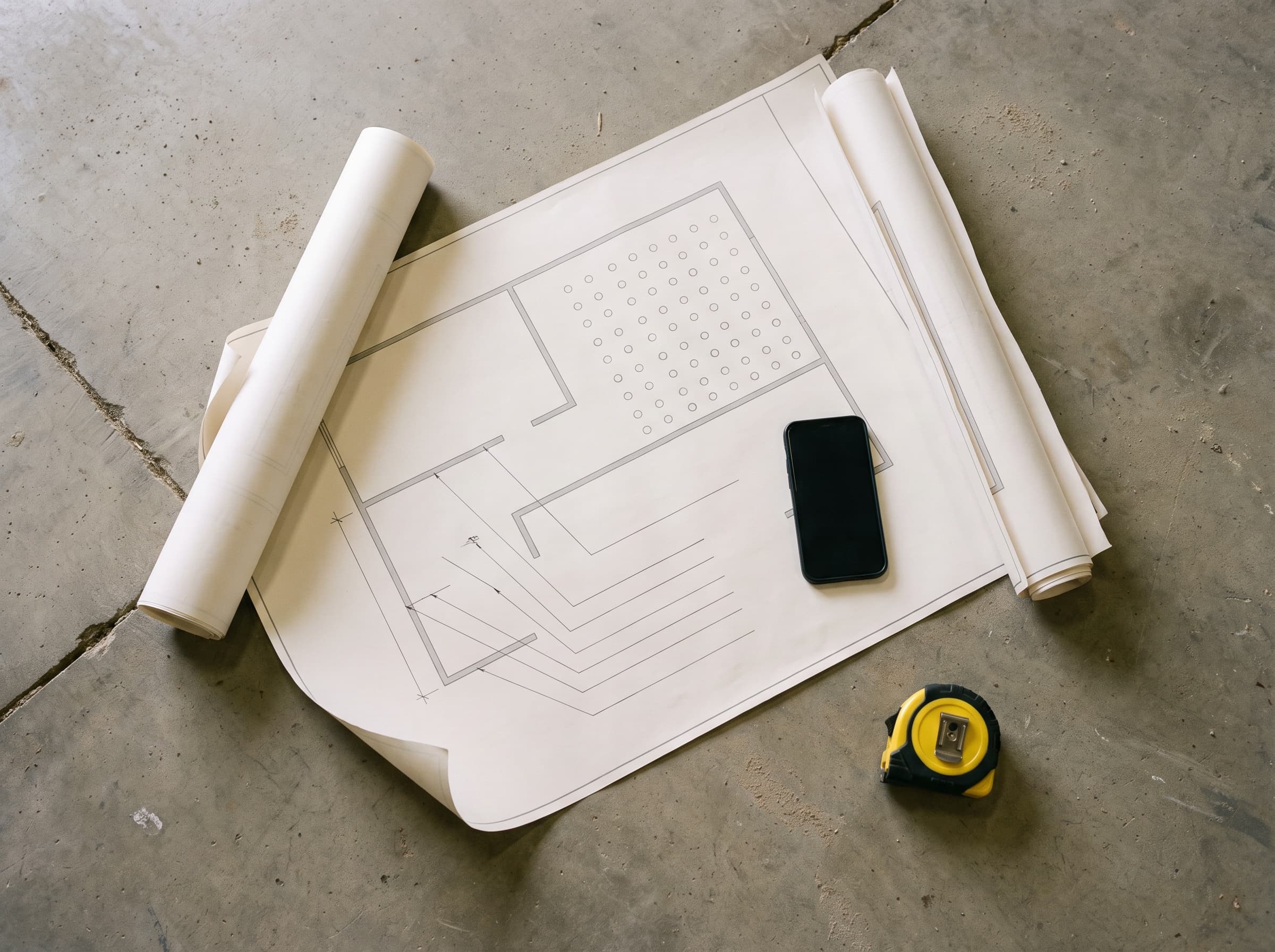
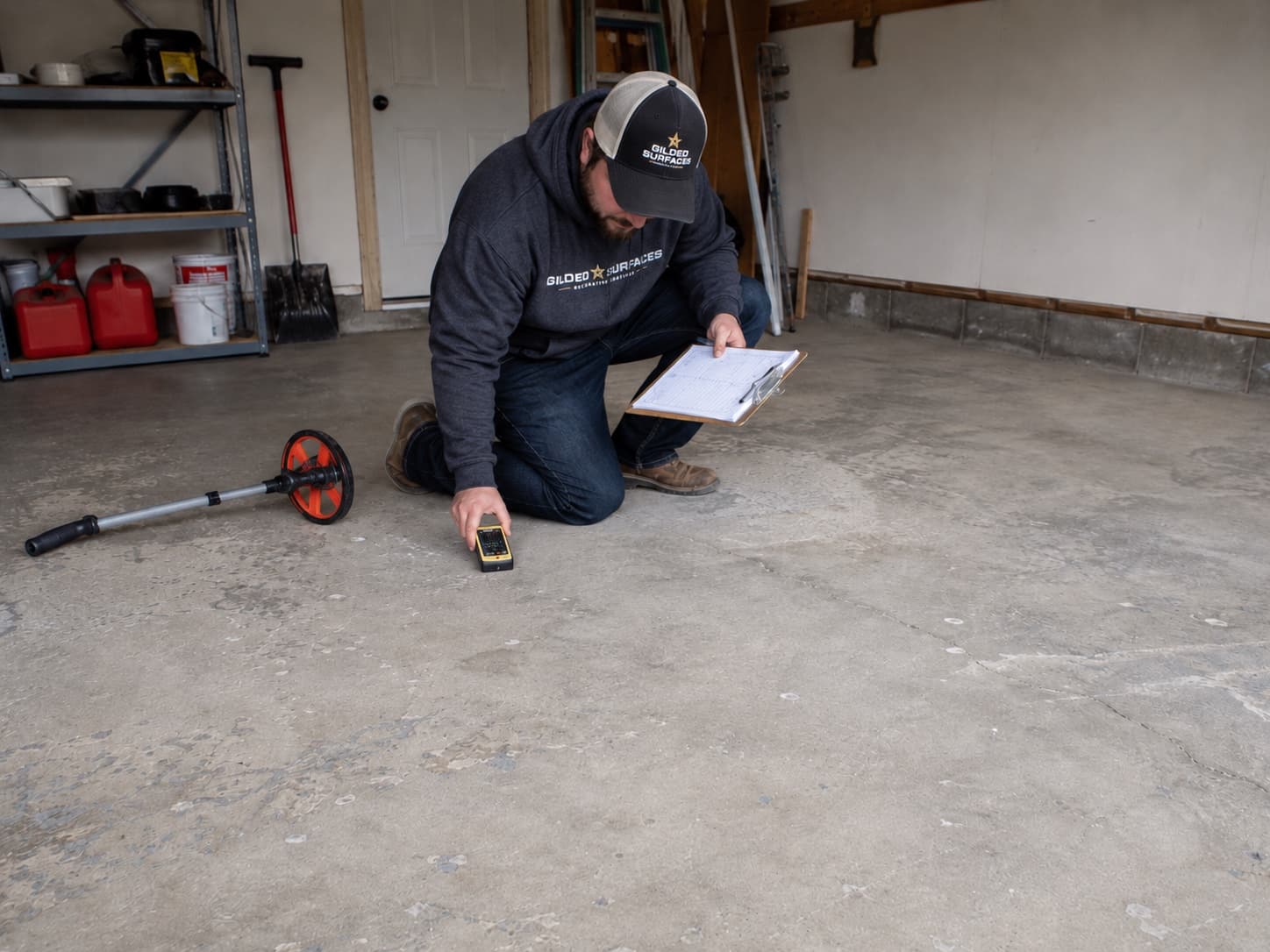
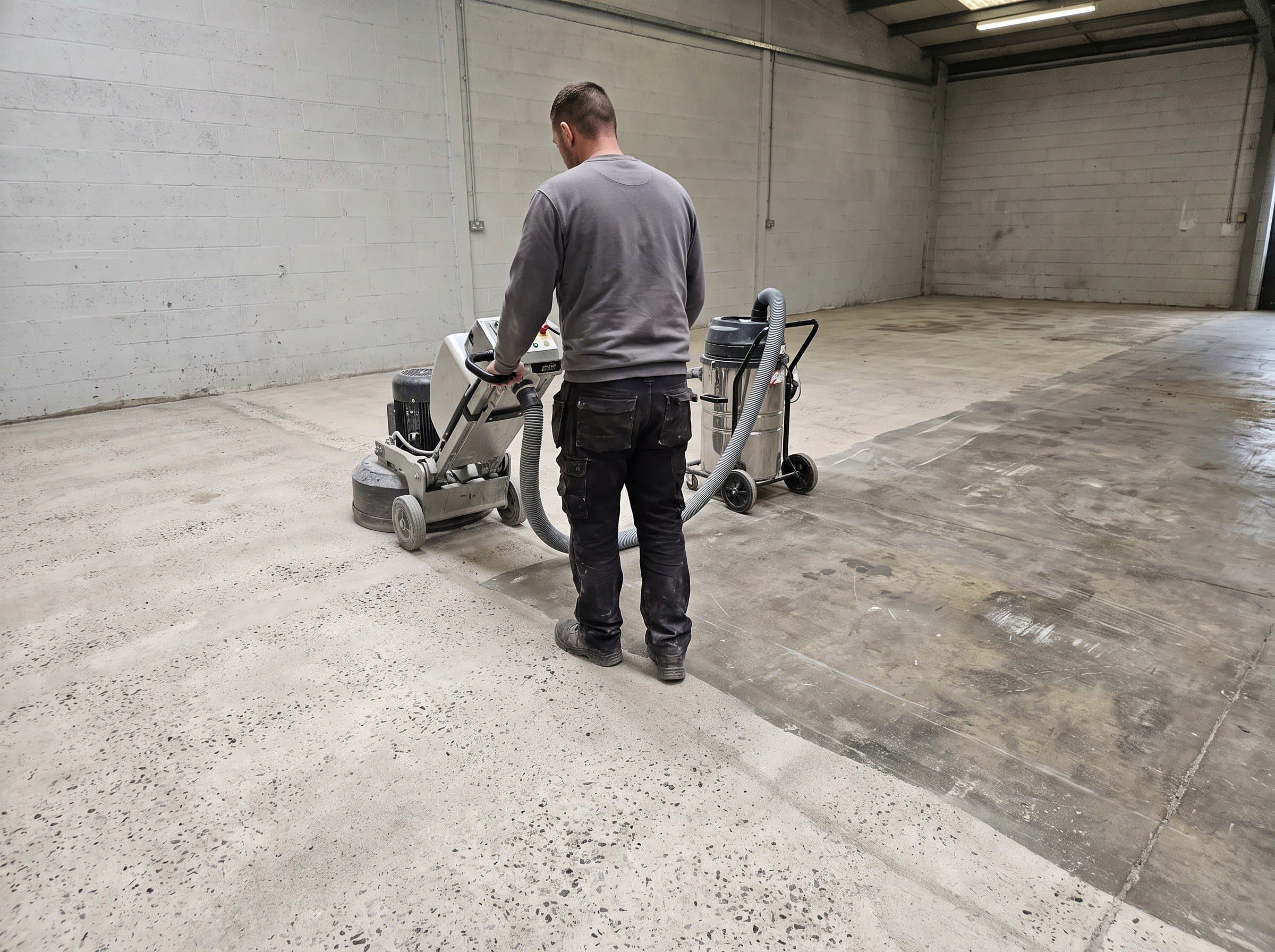
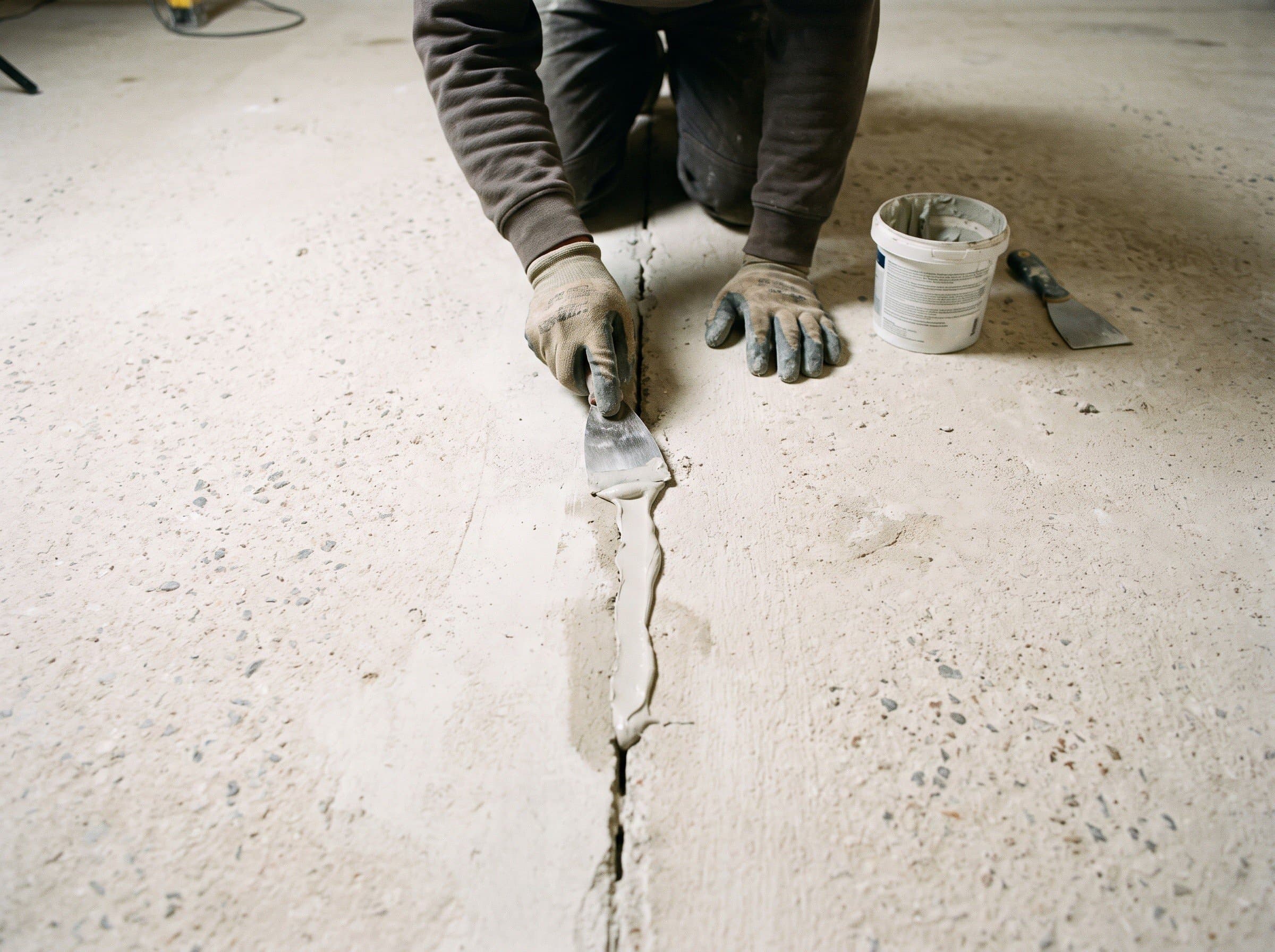
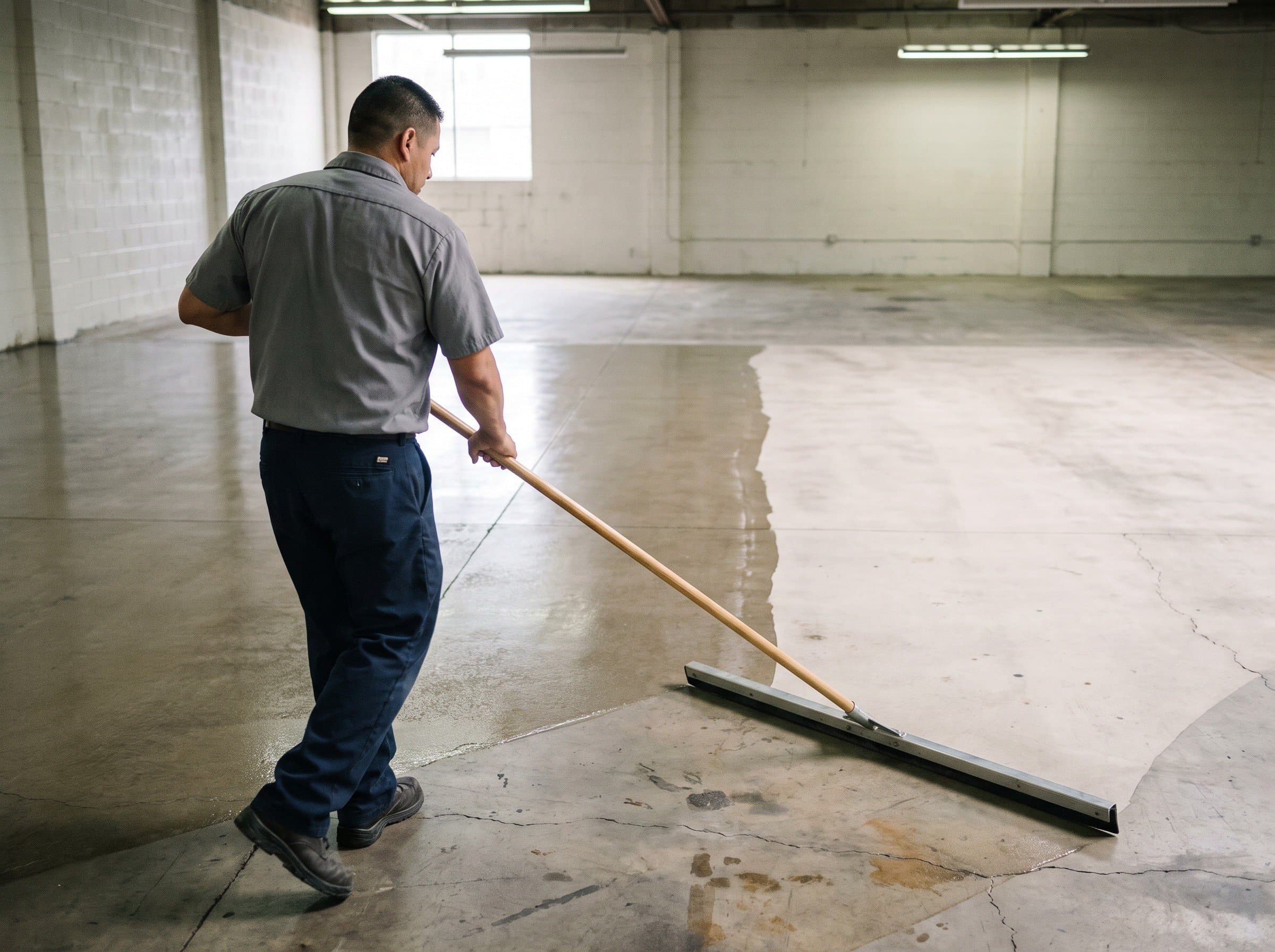
Six steps, from the photos you send to the walk-through at the end.
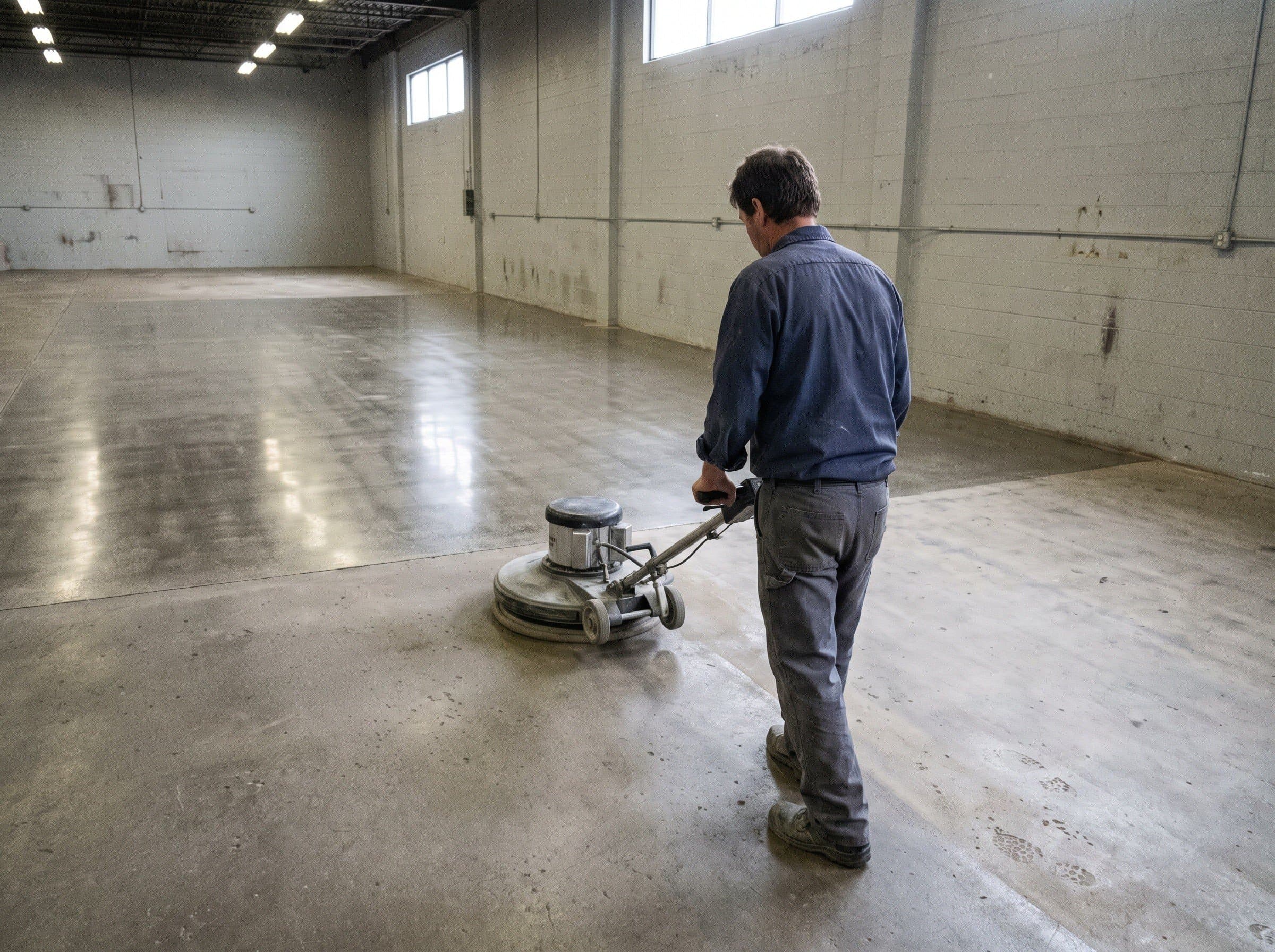
Not sure it's a polish?
Where the other three win.
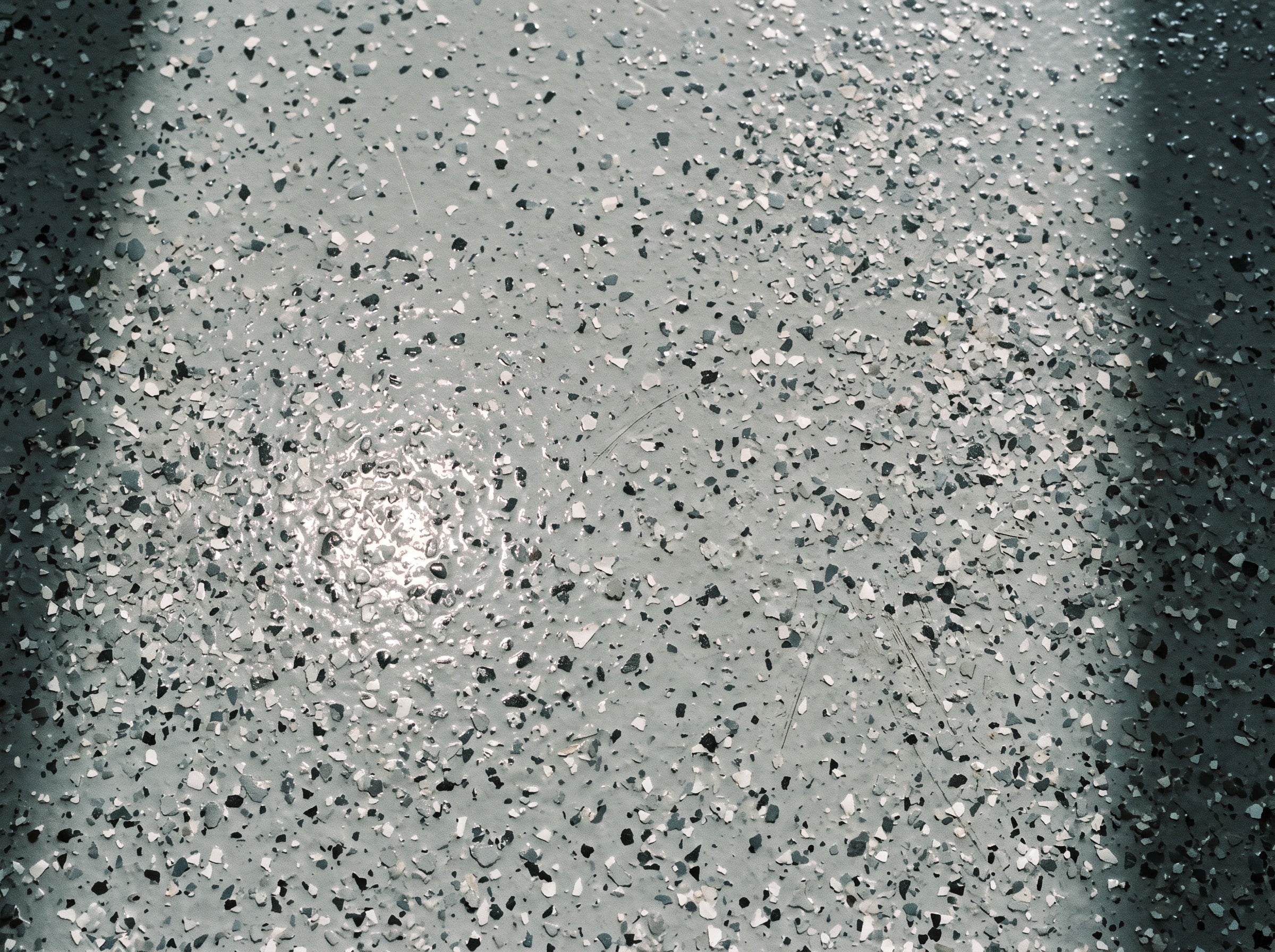 FlakeVinyl chip in the coat. Color and grip.
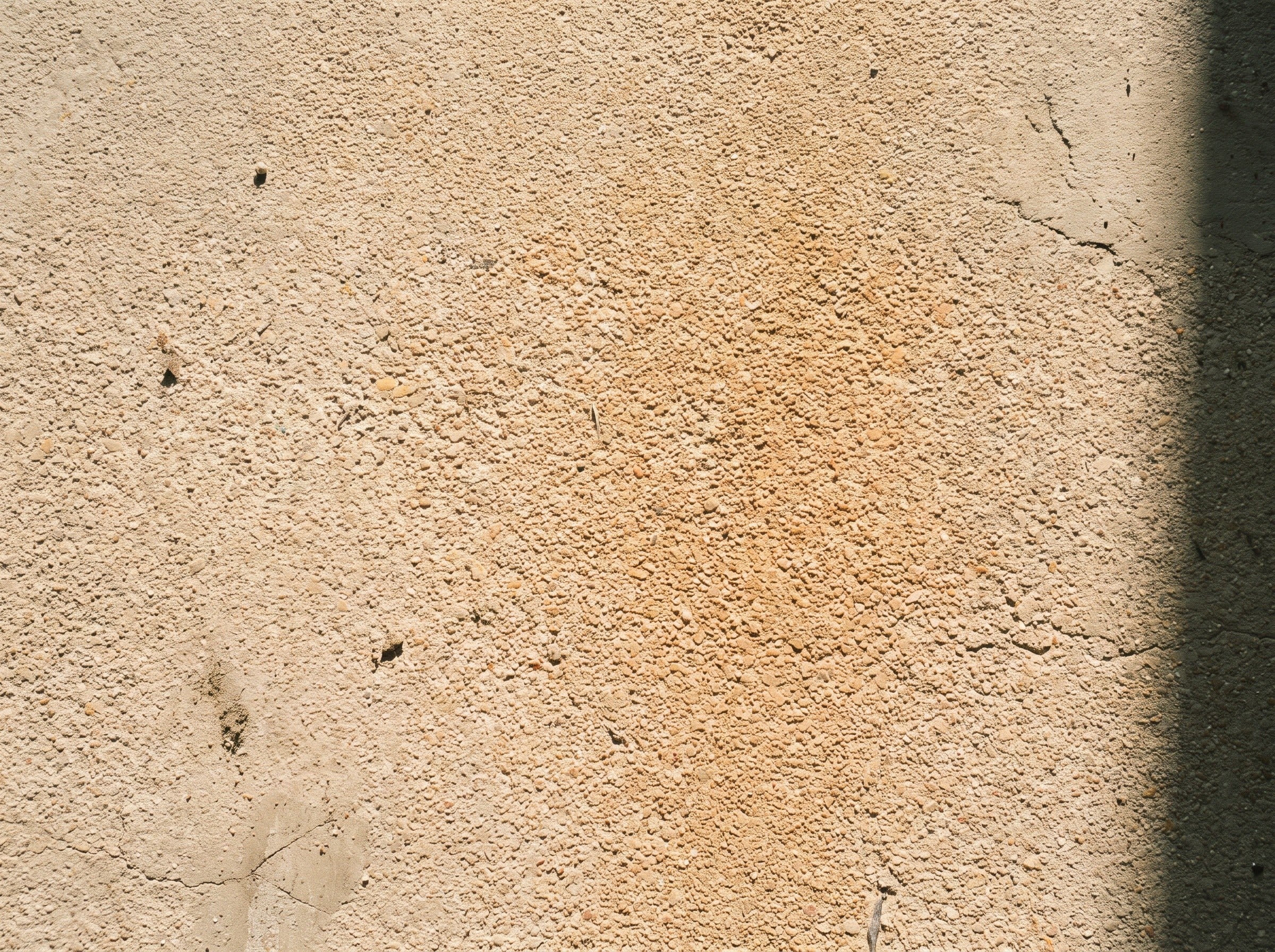 QuartzQuartz sand instead of chip. More texture underfoot.
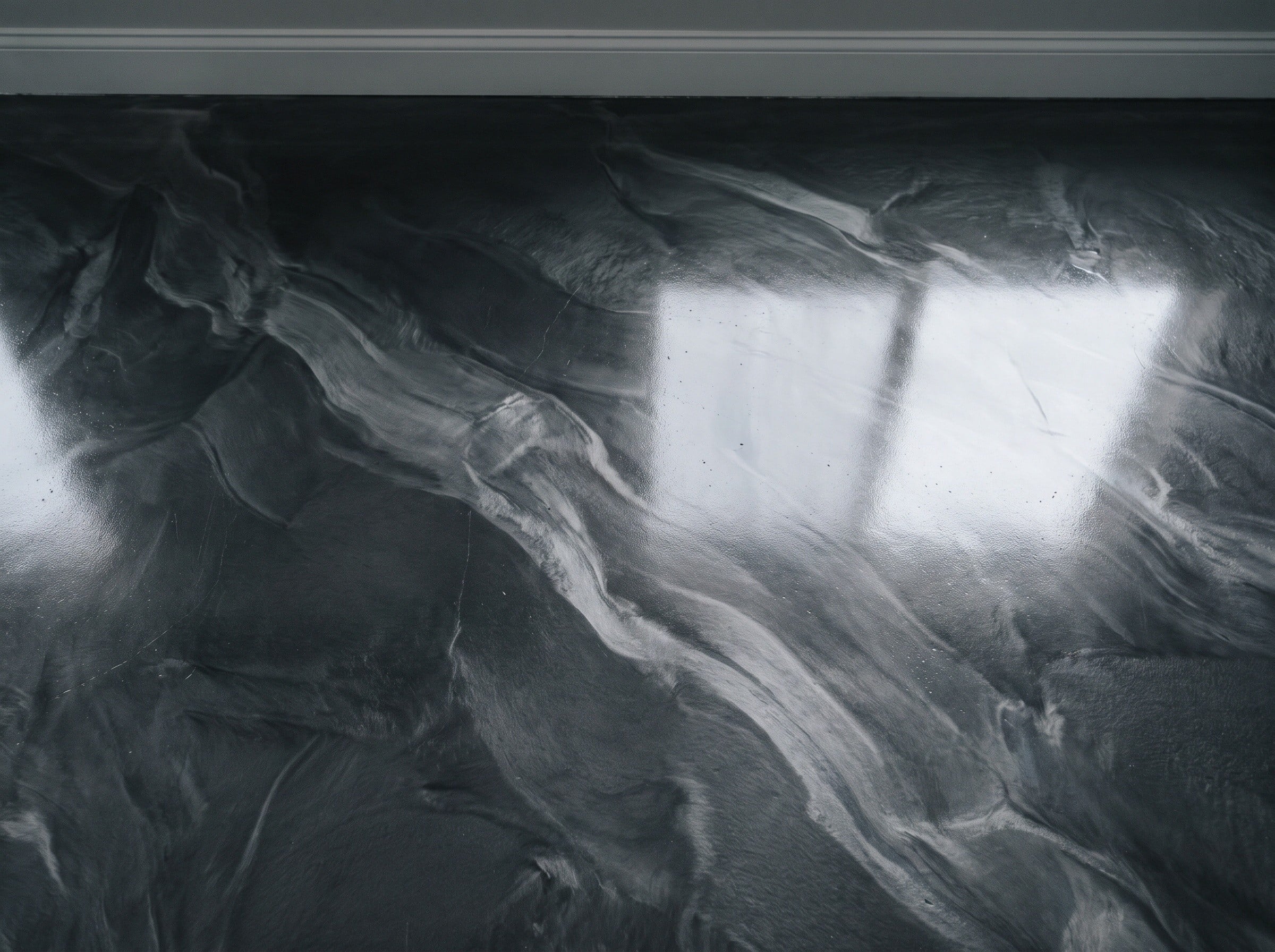 MetallicPigment worked through the resin. High gloss.
 Polished concreteYou're hereNo coating at all. The slab, ground and polished.
Polyaspartic isn't a fifth floor. It's the clear coat that goes on flake and quartz. What polyaspartic does
Straight answers
Questions we get about polished floors.
What people ask about a polish, answered before anyone steps on site.
They are different jobs. A coating is a floor laid on top of your slab. A polish is your slab, made into the floor. Sound, flat concrete with nothing to hide takes a polish. A slab with a history, or an owner who wants to pick a color, is a coating job.
Not to hold together. The densifier hardens the concrete itself. A penetrating guard is a separate choice, and that one is about stains rather than about strength.
Sometimes. The first pass removes the top of the slab, so some of the staining leaves with it and some sits deeper than that. How hard the concrete is decides how far it is worth chasing.
Dust mop it, damp mop it with a pH neutral cleaner, and keep bleach, solvents and citrus cleaners off it. If there is a guard on it, that is the part that wears, and on a busy floor it gets renewed every couple of years.
Any hard, smooth floor is slick with water on it, and a high gloss is the smoothest version of this one. So where water lands belongs in the conversation before a gloss level gets picked, because that level is the lever you have.
Yes, and it comes off in the first pass rather than in a job before the job. The coarse diamonds that open the surface are what lift an old coating or old adhesive, in the same pass that sets how much stone shows.
No, and we would rather say so here than in the small print. The 10-Year Limited Workmanship Warranty covers flake and quartz, where what can go wrong is a coating letting go of your slab. A polish has nothing to let go, so the document leaves it out by name.
Get my free quote
Tell us about your slab.
We'll say whether it will take a polish, and what it will look like if it does.
Financing
You can pay over time.
Ask for it when we send your written price.
Prefer to talk?
(682) 224-0240Weekdays 7am to 4pm. After hours, leave a message and we call you back.