
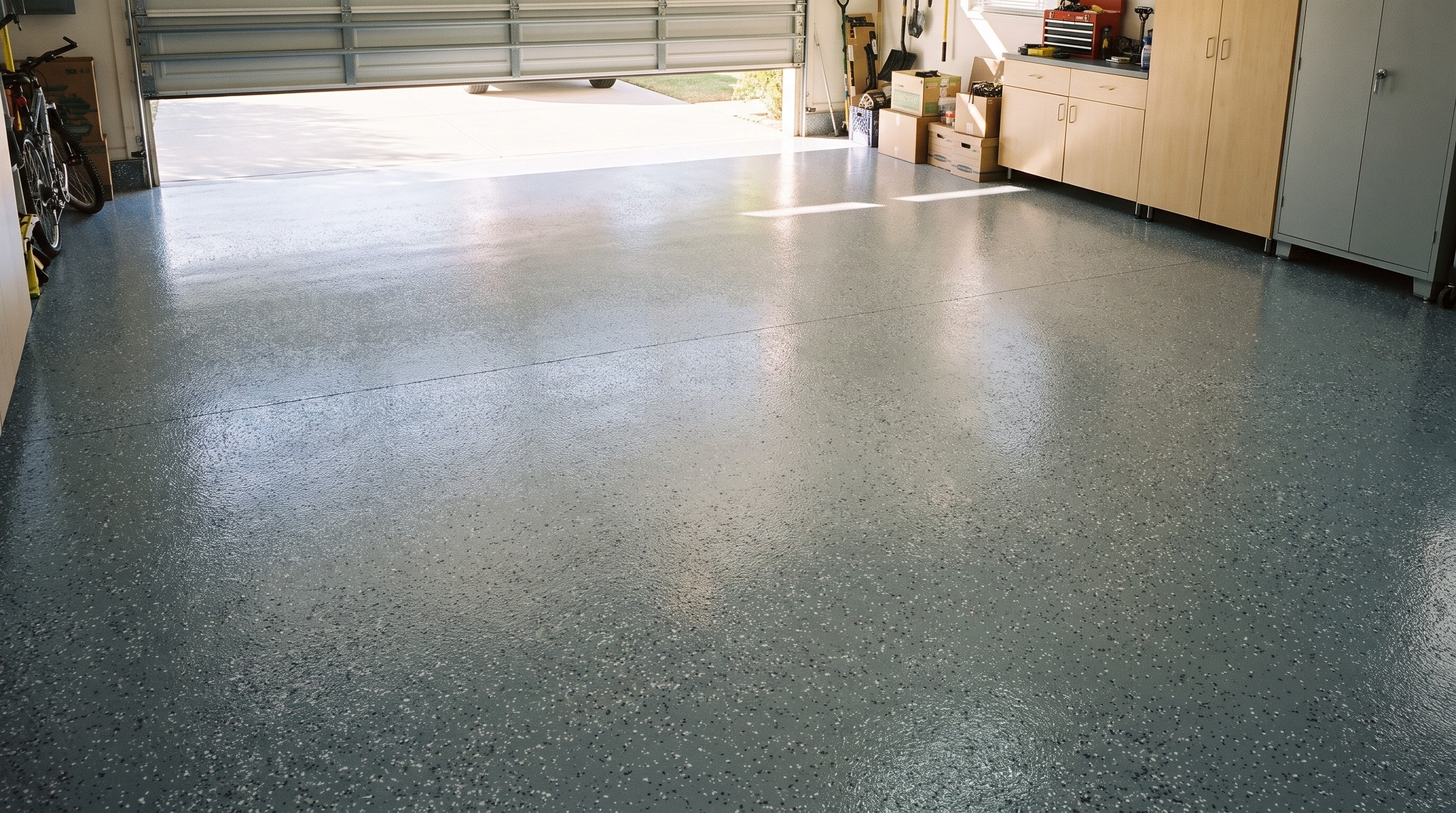
Our systems · Fort Worth, TX
Epoxy or polyaspartic? Both.
Epoxy builds the floor. Polyaspartic protects it from the sun. In most modern systems both are in the same floor, at different layers.
- Epoxy goes down first
- Polyaspartic takes the sun
- Most floors carry both
What is on your floor
Two resins, at different heights.
A resin floor is not one material. The coat at the bottom and the coat on top are different products doing different jobs.
In a garage the base coat goes down onto open concrete, the flake or the quartz is broadcast into it while it is still wet, and the clear coat seals it the next day. Two of those layers are resin, and they are not the same resin.
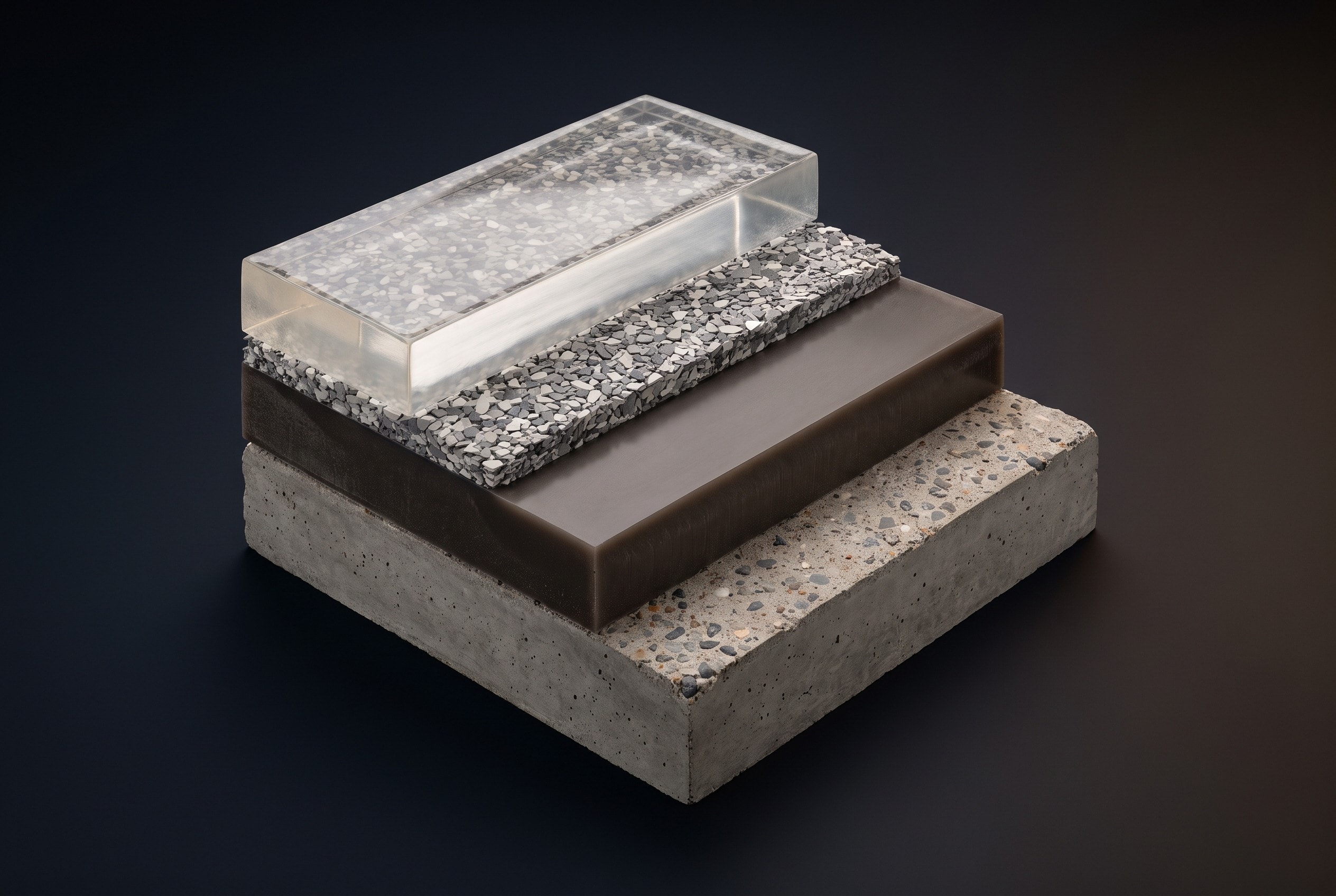
- CONCRETE SLABGROUND OPEN
- BASE COATEPOXY
- BROADCASTFLAKE OR QUARTZ
- CLEAR TOP COATPOLYASPARTIC
The name
Most people call every resin floor an epoxy floor.
We know what you mean. We are not going to correct you on the phone.
Here we are precise. The resin at the bottom does one job. The resin on top does another.
We install floor coatings in Fort Worth and across Tarrant County. This page settles the naming. The system pages say what we actually install and how it is built.
Row by row
What each resin actually is.
- Epoxy
- A two part resin that cures by chemical reaction rather than by drying. It is the one that grips bare concrete and builds the body of the floor, and the one that cannot take sunlight.
- Polyaspartic
- An aliphatic polyurea, and aliphatic is the whole point: aliphatic isocyanates are UV stable and the aromatic ones are not. It is a top coat, it cures fast, and it asks for trained hands.
- Polyurea
- The wider family that polyaspartic belongs to. On its own the word tells you nothing about yellowing. Aromatic polyurea is not UV stable either. Only aliphatic tells you that.
Chemistry
- Epoxy
- Resin plus an amine hardener. Cures by reaction, not by drying.
- Polyaspartic
- Polyaspartic ester plus an aliphatic isocyanate. An aliphatic polyurea.
Color in sunlight
- Epoxy
- Aromatic, so UV breaks the resin down. In direct sun it ambers in roughly 3 to 12 months, and it does not come back.
- Polyaspartic
- Aliphatic, so UV does not touch it the same way. It keeps its color in direct sun. This is the reason it goes on top.
Wear
- Epoxy
- Loses about 60 to 80 mg in a standard abrasion test. It scuffs and dulls first, and the walking lane starts to read differently from the floor beside it.
- Polyaspartic
- Loses about 20 to 30 mg in the same test, so roughly three times the abrasion resistance. It holds its gloss and takes scratching better.
Cure speed
- Epoxy
- Walk it in 12 to 24 hours. Recoat the next day, so a build runs over two or three days.
- Polyaspartic
- Walk it in 2 to 4 hours and recoat within a few hours, so base and topcoat can go down in one shift.
Working time
- Epoxy
- Roughly an hour in the bucket at room temperature. There is room to stop, re-cut an edge and fix a mistake.
- Polyaspartic
- Roughly 20 to 40 minutes, and less in the heat. A crew that mixes too much throws it away.
Temperature at install
- Epoxy
- Wants 55°F and up, and is happiest between 65 and 85. Below that it never fully cures and stays soft for good.
- Polyaspartic
- Goes down in weather epoxy will not take. Low temperature versions are rated to about 30°F. Heat shortens the pot life rather than stopping the cure.
Bond to concrete
- Epoxy
- This is the thing epoxy is best at. It wets into open concrete and grips, and it is the layer that carries the thickness, which is why it is the bottom of almost every system.
- Polyaspartic
- Made to go over the layer below it. It will stick to bare concrete, but you give up the body that the epoxy underneath is there to build.
Chemical resistance
- Epoxy
- The stronger one against aggressive acids. Novolac epoxies are what get specified for plants where acid hits the floor.
- Polyaspartic
- The stronger one against what a garage or a shop actually sees: oil, gas, brake fluid, road salt and de-icer.
Movement and impact
- Epoxy
- Harder and more brittle. A dropped tool chips it, and a slab that moves under it can crack the film.
- Polyaspartic
- More flexible, so it takes an impact and a moving slab better without cracking.
What the material costs
- Epoxy
- The cheaper resin of the two, and most of why a plain epoxy floor gets quoted low.
- Polyaspartic
- 2 to 3 times the material cost per square foot. Prep and labor are most of what a coated floor costs either way, so the resin is not where the price is decided.
Every figure here is a typical range for the resin family, not a promise about one product. A manufacturer's data sheet beats this table every time, and the slab, the mix and the weather on the day move all of it.
Polyaspartic wins most of these rows and epoxy wins two of them, and those two are the reason it is still down there. Epoxy grips the concrete and builds the body. Polyaspartic takes the sun and the wear. If somebody sells you one and calls the other outdated, they are selling you a product, not a floor.
Texas
What the sun does to the first few feet.
Stand in a Fort Worth garage in August and look at the first few feet inside the door. That strip gets sun most of the afternoon. It is the exact place where a standard epoxy ambers while the rest of the floor keeps its color, and a yellow band next to the color you picked is what people notice.
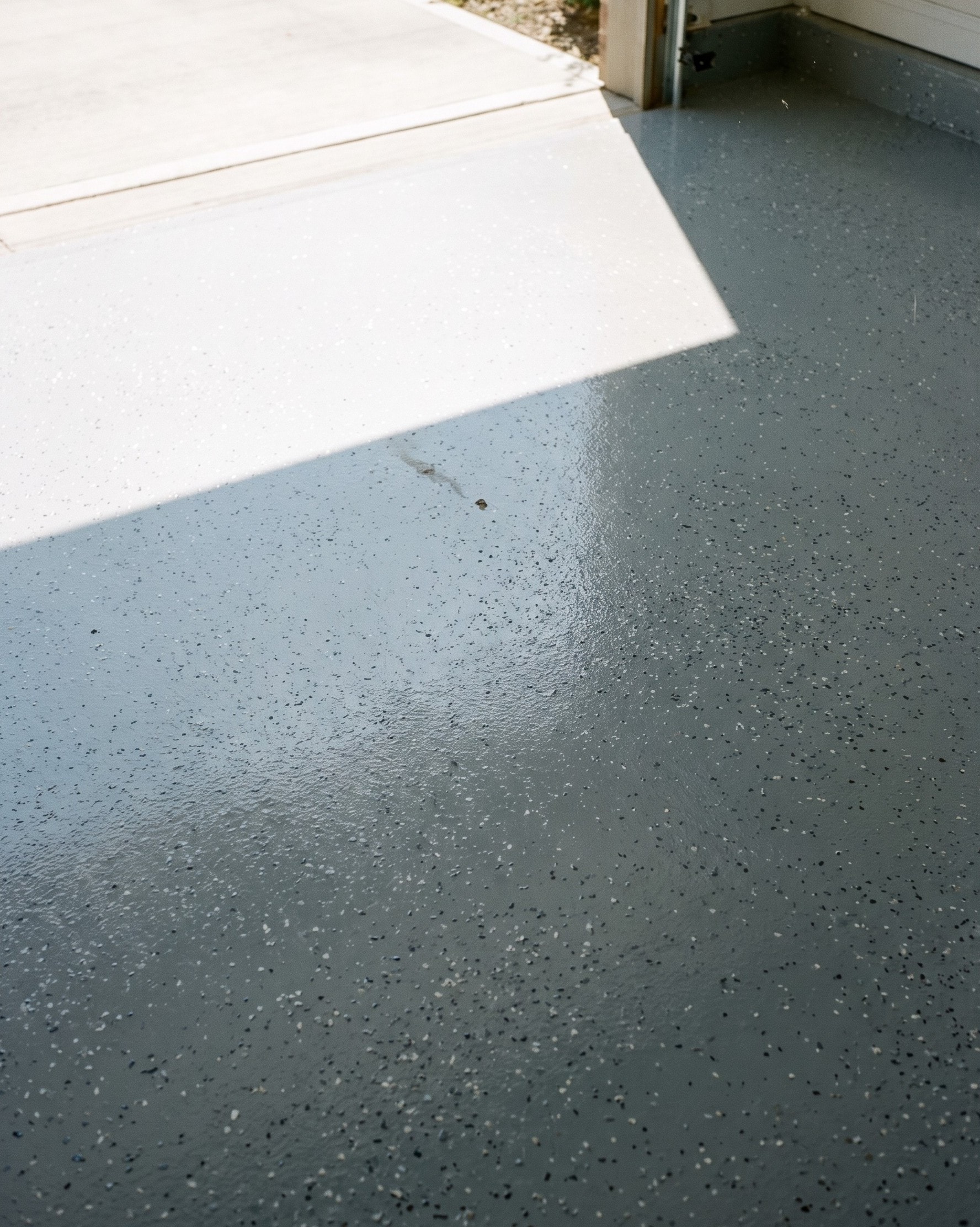
Heat is the other half. A warm slab shortens everything: how long the material stays workable, and how long a crew has to hold a wet edge. That changes how a floor gets installed. It does not change how good it ends up.
Cold cuts the other way. Epoxy slows down, and below a point it stops curing properly and stays soft. Polyaspartic keeps going. Interior work runs year round here, and Texas heat and humidity narrow the window for anything outdoors. All three of our coating systems are interior systems anyway.
Claims worth checking
Seven things this trade says.
These come up often enough to be worth taking apart. We do not use any of them.
“Lifetime warranty.”
Read who it covers and what. Most cover the first owner only, or the material and not the workmanship, or delamination and not wear. And when the company writing it is the company installing it, lifetime means the life of that company.
Ours is a 10-Year Limited Workmanship Warranty. Limited and workmanship are both doing work in that sentence, and it is not transferable: it ends when the house changes hands. We would rather write that down than let you find it later.
“One day install.”
It can be done. It is a scheduling claim, not a quality claim, and it says nothing about when you can use the floor. Walking on it, parking on it and fully cured are three different moments, and the last one is never the same day. A typical garage takes about two days on site.
“Permanent. Forever. Never needs replacing.”
Every floor wears. A clear coat is a sacrificial layer, and that is its job. The honest version is better anyway: a system that was built right can be sanded and given a fresh clear coat later, without tearing the whole floor out.
“One hundred percent solids is better.”
Solids tells you how much of the product stays on the floor after it cures. It says nothing about whether it holds color in the sun or stands up to what you spill. The chemistry answers that, not the number.
“Twenty times stronger than epoxy.”
There is a real test and a real number, and it is not twenty. Abrasion gets measured as weight lost over a set number of cycles: a standard epoxy gives up about 60 to 80 mg, a polyaspartic about 20 to 30. That is roughly three times, it is the figure in the table above, and any factor bigger than that was invented or pulled out of context.
“UV resistant epoxy.”
Standard epoxy is aromatic, and aromatic resin is not UV stable. What holds color is the aliphatic layer on top.
“Epoxy always peels.”
It does not. Epoxy that fails, fails at the bottom. The coating was fine. What it was stuck to was not. That is a sales line from somebody who only sells the other one.
Which system
The resin is not the choice. The room is.
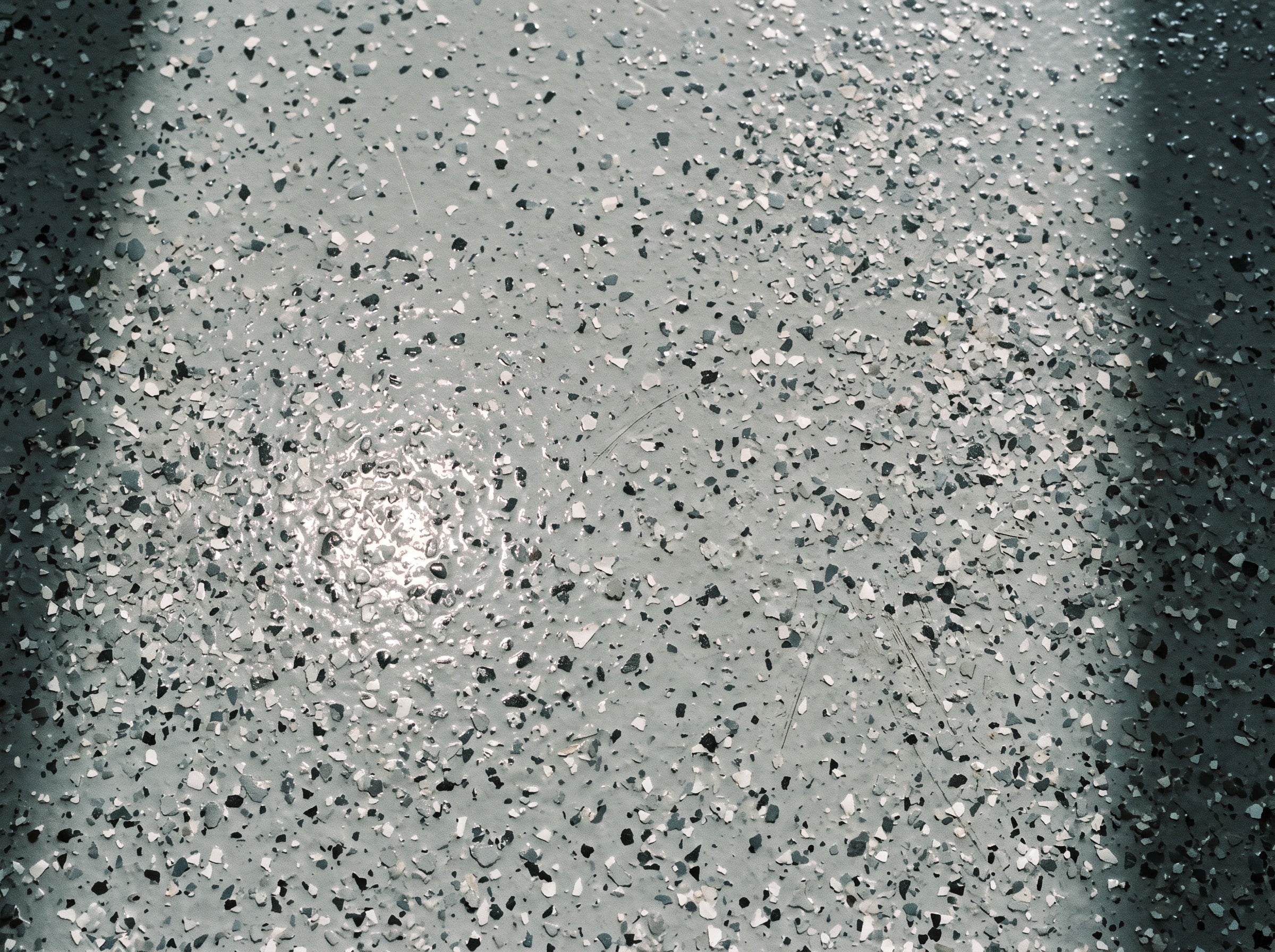
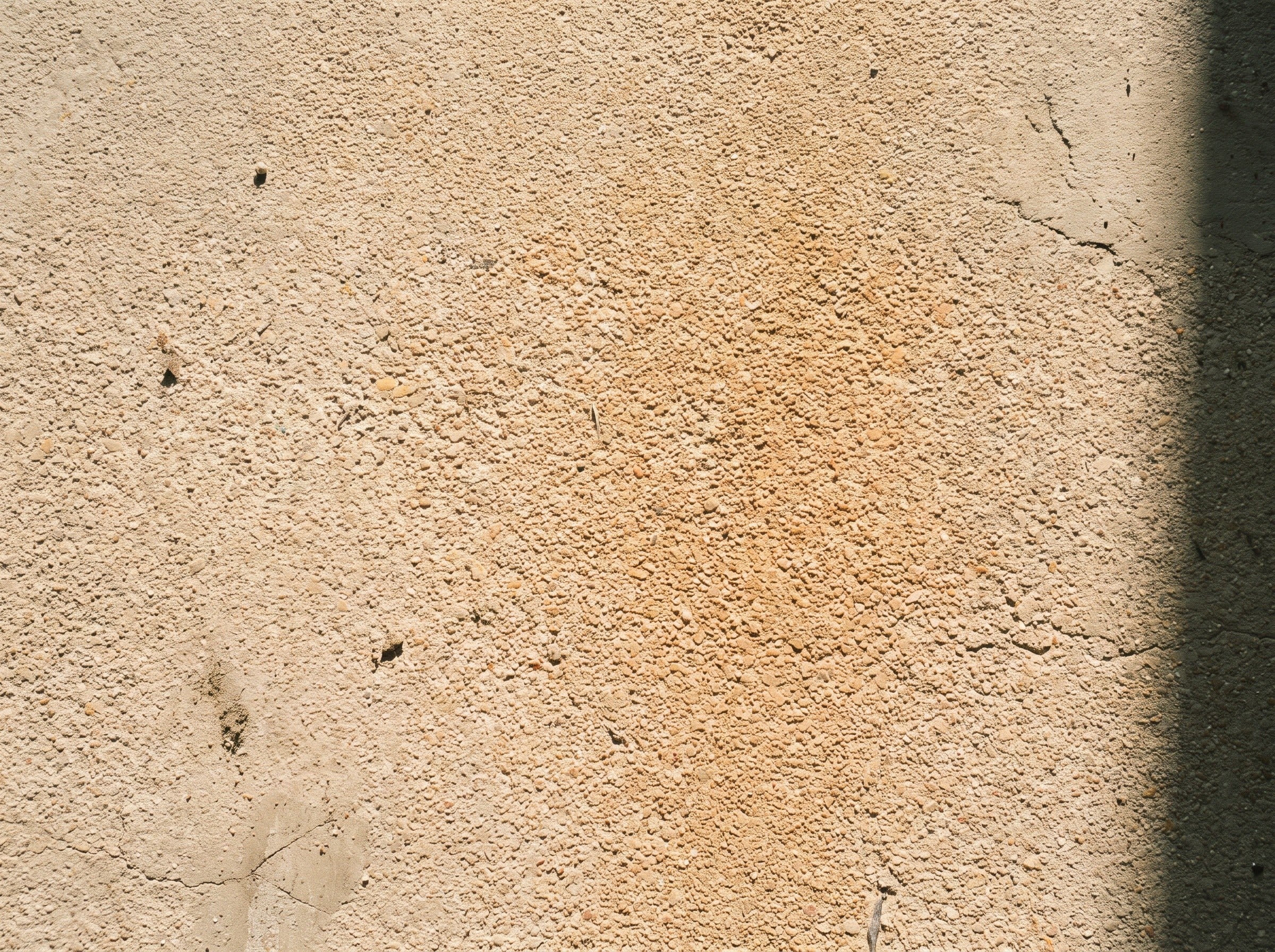
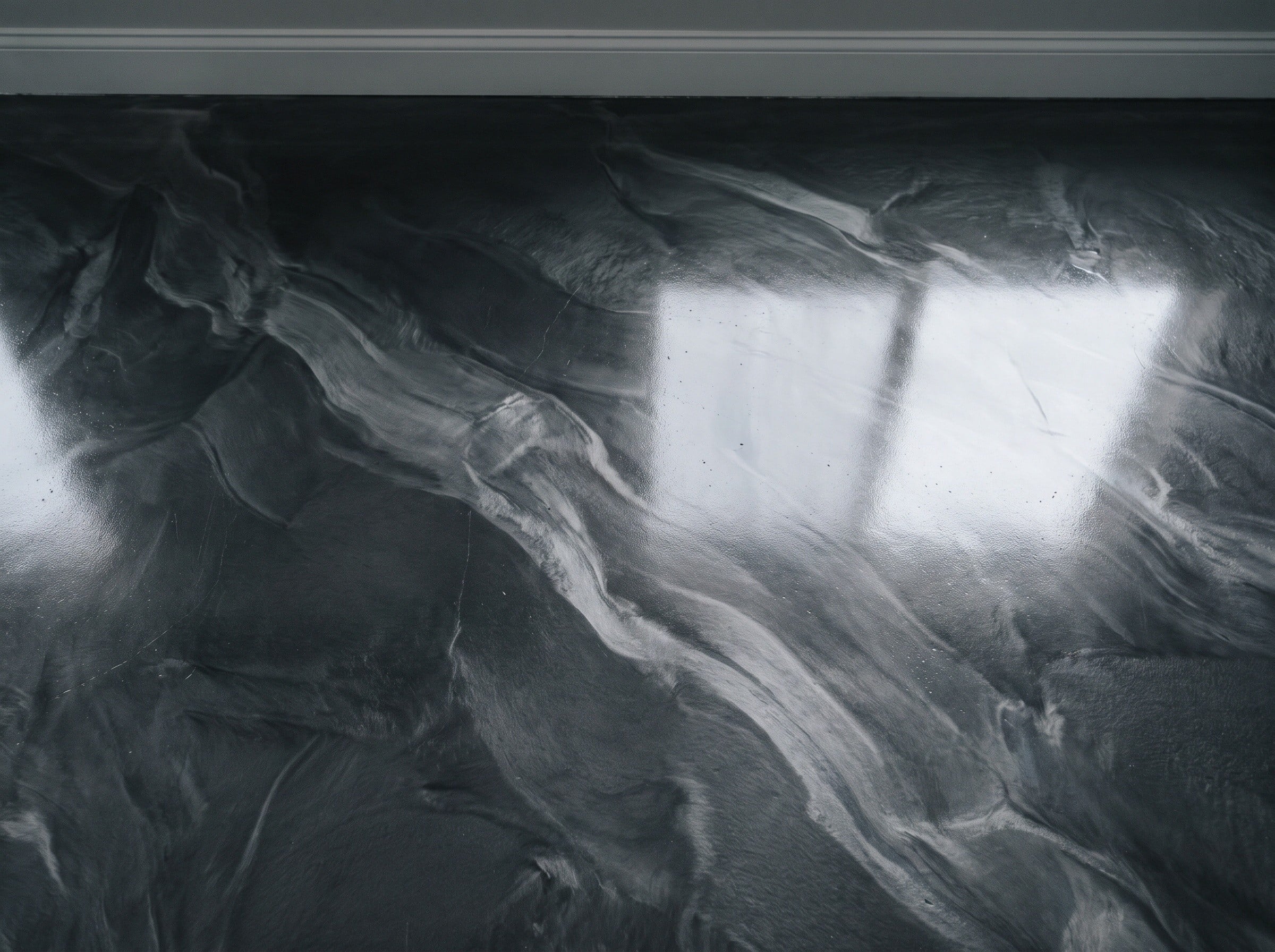
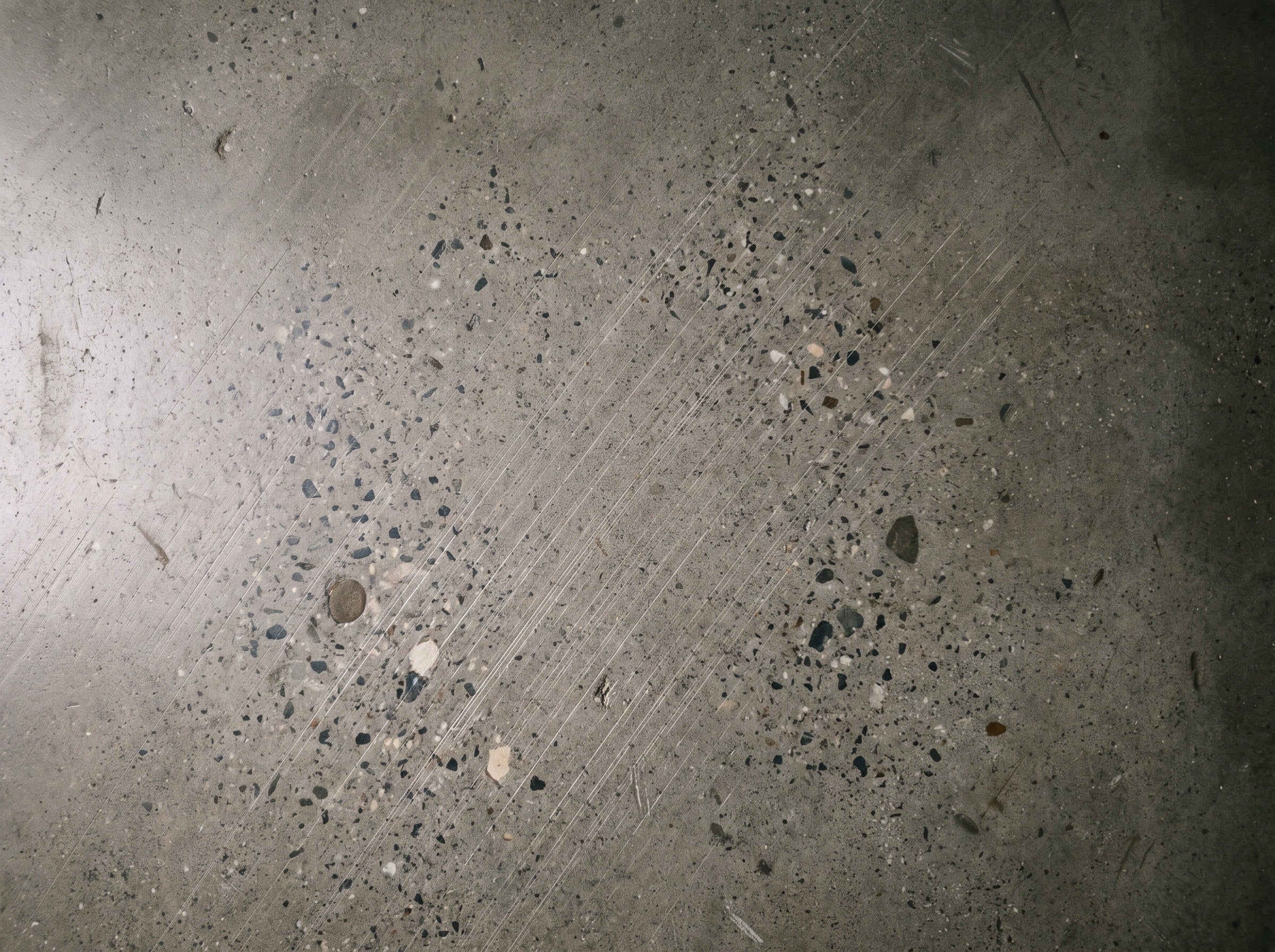
Quartz goes into hangars, warehouses and wet areas. Metallic goes into offices, lobbies and showrooms. Which one lands on your floor is a question the room answers, not the resin. Compare all four side by side
Straight answers
Questions we get about the two resins.
What people ask once they work out that the choice was never really theirs to make.
No. They do different jobs in the same floor. Epoxy bonds to concrete and builds thickness. Polyaspartic holds color in sunlight and gets you back on the floor sooner. A floor with both in it is not a compromise, it is how a modern system is put together.
Some suppliers run resin all the way down without an epoxy base. What we broadcast into in a garage is epoxy, because it bonds hard to open concrete and it carries the thickness. Which build your slab gets is a decision we make after we look at it.
As a material, yes, sooner than a comparable epoxy build. On our floors it does not move the number: flake, quartz and metallic all come back at the same three moments. You can walk it at 8 to 10 hours, put weight on it at 48 to 72 hours, and it is fully cured at seven days.
Because epoxy got there first and the word stuck to the whole category. It is also the word people search for. We answer to it. On this page we are precise about it because the difference decides whether your floor keeps its color.
It is a real chemistry doing a real job, and it is also the thing this trade currently shouts about. Both can be true. The test is whether a claim about it survives a question, which is what the seven below are for.
That is not a promise we will put in writing. What is true is that the aliphatic layer on top is the one holding the color, and that it is the layer standing between the sun and everything under it. It is also the layer that wears, because that is what a top coat is for.
You can ask, and the answer is usually that it would make your floor worse. Taking the epoxy out costs you the bond and the thickness. Taking the polyaspartic out costs you the color where the sun reaches. We would rather talk about the room than the resin.
Get my free quote
Talk through your floor.
Tell us the room and what happens in it. We'll say which build fits, and what goes on top of it.
Financing
You can pay over time.
Ask for it when we send your written price.
Prefer to talk?
(682) 224-0240Weekdays 7am to 4pm. After hours, leave a message and we call you back.